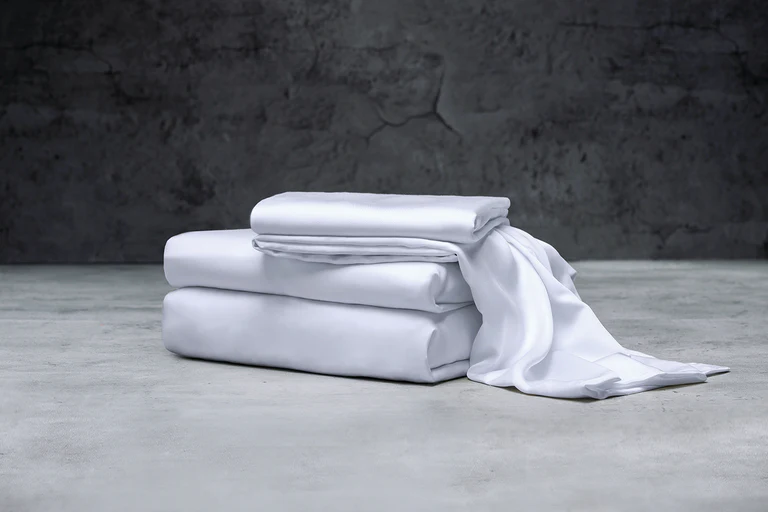
Fabricantes de lençóis e toalhas: Coordinated Development for Hotel Programs
Hotel guests rarely think about the relationship between a bed sheet and a towel, yet they judge both in the same stay. A guest who sleeps well on a smooth, well-fitted sheet and then dries off with a thin, rough towel will remember the towel. A guest who enjoys a thick, absorbent towel but sleeps on a sheet that pills, wrinkles badly, or feels coarse will remember the sheet. For hotel buyers, sheets and towels are not separate purchases that happen to arrive from the same supplier. They are a coordinated guest experience, and developing them together, with matching quality standards, appearance, e durabilidade, is one of the most effective ways to protect a hotel brand.
Many hotel programs, no entanto, develop sheets and towels separately, at different times, with different suppliers, and sometimes with different quality expectations. The result is a bedroom and bathroom that feel disconnected, laundry teams that must manage incompatible care requirements, and purchasing teams that cannot compare performance across products. Coordinated development solves this problem by treating sheets and towels as one program from the start, with shared standards, aligned testing, and a single development timeline. This article explains how hotel buyers can work with fabricantes de lençóis e toalhas to develop a coordinated program that performs consistently in real hotel use.
Nantong Integridade Têxtil, founded in 2007 em Tongzhou, Nantong, Jiangsu, manufactures mid-to-high-end home textiles including sheet sets, conjuntos de capa de edredão, roupa de cama acolchoada, tecidos, roupa de hotel, cobertores, e travesseiros, with OEM and ODM service. Its hotel linen production sits alongside its bedding production, which makes coordinated development a practical proposition rather than a theoretical ideal, supported by ISO9001, ISO14001, ISO45001, e padrão OEKO-TEX 100 systems.
Why Coordination Matters More Than Matching Colours
Coordination is often misunderstood as colour matching. Colour matters, because a white sheet and a white towel that age to different shades will look mismatched, but true coordination goes much deeper. It includes fabric quality, sensação de mão, durability under commercial laundry, shrinkage behaviour, and the way products perform after dozens of wash cycles. A sheet and towel that start out looking coordinated but age differently will soon look like products from different programs, because laundry is the great revealer of quality differences.
Coordination also affects operations. Housekeeping teams handle sheets and towels every day, and products with very different care needs, drying times, or folding behaviour complicate their work. Laundry teams benefit when products share compatible wash temperatures, drying expectations, and handling characteristics. Purchasing teams benefit when a single supplier, or a coordinated supplier group, can provide consistent documentation, batch traceability, and performance data for both product types.
Mais importante ainda, coordination affects the guest’s overall impression. Guests do not evaluate a hotel room product by product; they form a single impression of comfort, cleanliness, e qualidade. A coordinated program reinforces that impression at every touchpoint, from the bed to the bathroom. A fragmented program creates small inconsistencies that accumulate into a feeling that the hotel is less considered than it claims to be.
Start With a Hotel Program Brief, Not Two Product Briefs
Coordinated development begins with a single program brief that covers both sheets and towels. The brief should describe the hotel’s positioning, room types, guest expectations, laundry arrangements, and replacement cycle. A luxury hotel, a mid-scale business hotel, and a resort have different priorities, and those priorities should shape both product types together. A resort with outdoor pools, por exemplo, may prioritise towel absorbency and durability, while a business hotel may prioritise sheet smoothness and crisp appearance after pressing.
The brief should also state the performance priorities that apply across the program. Is softness after many washes more important than initial appearance? Is durability under high-temperature commercial laundry the dominant requirement? Is sustainability, in the form of longer product life and reduced replacement frequency, a stated goal? When priorities are stated for the program as a whole, trade-offs for sheets and towels can be made consistently rather than in isolation.
Quantities and timelines should be planned together as well. Sheets and towels wear at different rates and are replaced at different intervals, but a coordinated launch, with aligned sampling, testando, and approval, avoids the situation where one product is ready months before the other and the program launches in a fragmented way. A shared timeline also allows the buyer and manufacturer to plan laundry testing efficiently, rather than repeating similar tests at different times.
Developing Sheets and Towels in Parallel
Parallel development does not mean that sheets and towels are developed identically. They have different constructions, materiais, and performance requirements, and each needs its own specification and testing. Parallel development means that decisions for one product are made with awareness of the other, and that key milestones, such as prototype review, wash testing, and approval, are aligned.
For sheets, development should focus on fabric composition, tecer, peso, size accuracy, fitted depth where relevant, resistência da costura, and appearance after washing and pressing. For towels, development should focus on fibre type, pile construction, weight per square metre, absorbency, edge finishing, linting, and appearance after repeated laundering. These are different checklists, but they should be evaluated against the same program standard for quality and durability.
Sampling in parallel allows the buyer to compare sheets and towels together on a real bed and in a real bathroom setting, rather than in separate meetings. Colour, sensação de mão, and overall impression can be judged as a guest would experience them. It also allows laundry testing to be planned as a program: sheets and towels can go through the same commercial laundry cycles, so that their ageing behaviour can be compared directly and any divergence addressed before approval.
Laundry Testing: The Decisive Stage for Hotel Textiles
Hotel textiles live in the laundry as much as in the guest room, and coordinated development must treat laundry testing as a decisive stage rather than a formality. A sheet or towel that performs well when new but deteriorates quickly under commercial laundry will cost the hotel far more in replacement and guest complaints than a product that costs slightly more but lasts longer. Testing should simulate the hotel’s actual laundry conditions, including wash temperature, detergent, drying method, and cycle frequency.
Key laundry outcomes to check include shrinkage, colour retention, bolinhas, thinning, edge fraying, and changes in hand feel. For towels, absorbency after repeated washing is critical, because a towel that loses absorbency has lost its primary function. For sheets, smoothness and appearance after pressing matter, because a sheet that emerges wrinkled or rough undermines the room’s presentation even if it is technically clean.
Buyers should request laundry test results for both product types from the same testing regime, so that results are comparable. If sheets survive fifty commercial cycles well while towels from the same program degrade after twenty, the program is not yet coordinated in durability, and the towel specification needs attention. Nossa fábrica supports this kind of structured testing through its quality systems, and buyers should expect any hotel supplier to provide test records rather than assurances alone.
Appearance, Marca, and the Guest Experience
Appearance coordination extends beyond colour to texture, peso, e acabamento. A heavy, plush towel paired with a thin, papery sheet creates a sensory mismatch, just as a crisp, premium sheet paired with a lightweight towel does. The buyer should define the intended sensory level for the program and check both products against it. This does not mean sheets and towels must feel the same; it means they must feel equally considered for their different purposes.
Branding elements, such as dobby borders, padrões jacquard, logotipos bordados, or woven labels, should also be developed together. A logo that looks refined on a towel border may look crowded on a sheet hem, and vice versa. Developing branding across both products allows the buyer to create a consistent visual language that guests recognise throughout the room. It also allows the manufacturer to plan production efficiently, rather than treating each branding element as an isolated request.
Packaging and presentation for hotel programs deserve similar coordination. Sheets and towels may be packed differently for storage and housekeeping, but their labelling, carton identification, and delivery documentation should be consistent, so that hotel staff can manage stock without confusion. Clear, consistent documentation is a small detail that saves considerable operational time across a large hotel program.
Managing Replacement, Stock, and Long-Term Consistency
A hotel program does not end at launch. Sheets and towels are replaced continuously as they wear, and long-term consistency is one of the hardest challenges in hotel textile purchasing. A coordinated program should include a plan for reorders: how colour, tecido, and construction will be kept consistent over time, how batch variation will be controlled, and how the manufacturer will inform the buyer if a material or process must change.
Buyers should agree on a reorder specification that matches the approval samples, and retain those samples as references for future deliveries. They should also discuss stock planning, because sheets and towels have different replacement rates. A program that plans replenishment for both products together, with regular reviews of wear and stock levels, avoids the common situation where one product is overstocked while the other is urgently short.
Scale and stability matter for long-term consistency. A manufacturer with substantial production capacity and structured systems is better placed to maintain a program over years than a small, informal supplier that may change materials or processes without notice. Nantong Integrity Textile operates about 30,000 square metres of production space with around 143 staff, and monthly capacity of about 40,000 sheet sets and 25,000 conjuntos de capa de edredão, alongside hotel linen production. That structure supports the continuity that hotel programs require.
Custo, Valor, and the Respect Target Price Conversation
Coordinated development also clarifies cost discussions. When sheets and towels are developed together, the buyer can see the total program cost and make value decisions across the program, rather than optimising one product at the expense of the other. Por exemplo, a buyer might choose a slightly more durable towel that lasts longer, accepting a higher initial cost because the total replacement cost falls. That decision is easier to make when the program is viewed as a whole.
INTEGRIDADE TÊXTIL follows a Respect target price approach, in which the buyer names one target price and the factory answers yes or no. Applied to a coordinated hotel program, this approach encourages an honest conversation about what quality and durability a given program budget can support across both sheets and towels. Rather than negotiating each product in isolation until specifications drift, buyer and factory can agree a program-level standard and price that both sides can sustain.
Value in hotel textiles should be measured over the product’s life, not only at purchase. A sheet or towel that lasts twice as long under commercial laundry, maintains its appearance, and generates fewer guest complaints is usually the better investment, even at a higher initial price. Coordinated development makes that lifetime value visible, because testing and replacement planning are built into the program from the start.
Perguntas frequentes
Why develop sheets and towels together rather than separately?
Developing them together ensures consistent quality, appearance, laundry performance, and guest experience across the bedroom and bathroom. Separate development often produces mismatched ageing, incompatible care needs, and a fragmented brand impression.
What should a coordinated hotel program brief include?
The brief should cover hotel positioning, room types, guest expectations, laundry arrangements, replacement cycles, performance priorities, quantidades, and timelines for both sheets and towels as one program.
How important is commercial laundry testing?
It is decisive. Hotel textiles must survive frequent, high-temperature commercial cycles. Testing should check shrinkage, colour retention, bolinhas, absorbency for towels, and appearance after pressing for sheets, under realistic laundry conditions.
How can a hotel maintain consistency across reorders?
By retaining approval samples, agreeing a written reorder specification, controlling batch variation, and requiring the manufacturer to notify the buyer before any material or process change. Regular stock and wear reviews also help.
Do sheets and towels need to feel the same?
Não. They serve different purposes and should feel appropriate to those purposes. Coordination means they feel equally considered in quality and durability, not identical in texture.
How should cost be judged for a hotel textile program?
Cost should be judged over the product’s life, including replacement frequency, laundry performance, e satisfação dos hóspedes, rather than by purchase price alone. A longer-lasting program often costs less in total.
Conclusion and Next Step
A hotel room is experienced as a whole, and its textiles should be developed as a whole. Coordinated sheet and towel development, with a single program brief, parallel sampling, shared laundry testing, aligned branding, and a clear reorder plan, produces a guest experience that feels considered at every touchpoint and an operational program that is easier to manage over time. It also gives the buyer a stronger basis for judging value, because performance is measured across the program rather than product by product.
If you are planning or refreshing a hotel textile program and want sheets and towels developed together to a consistent standard, Contate-nos to discuss your hotel positioning, laundry arrangements, and program requirements. Nantong Integrity Textile can work through specifications, amostragem, and laundry testing with you for both product types in parallel. Reach us at Alex@integritytex.com, by WhatsApp at +86 151 5289 1159, or through www.integritytex.com. A coordinated program is the most reliable way to ensure that every guest, in every room, encounters the same standard of comfort.