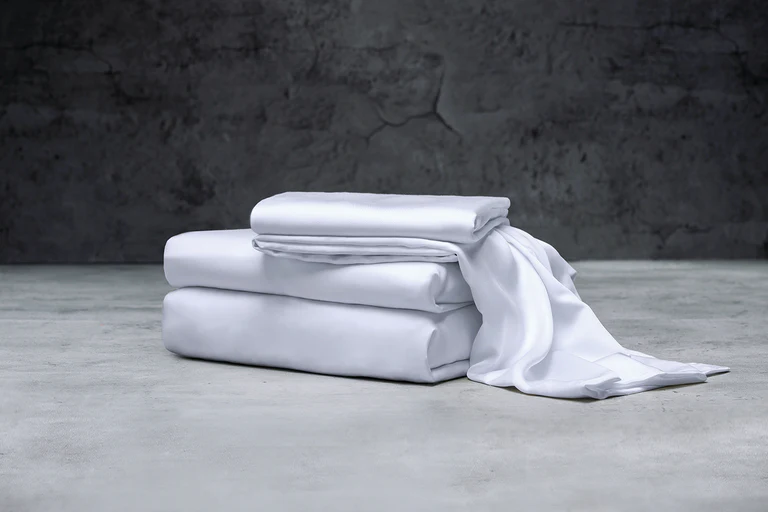
Your biggest retail account just sent the new vendor questionnaire. Page four asks about the environmental footprint of your bed sheets and towels: water usage in dyeing, chemical compliance of finishes, recyclability of packaging, and — the question that made your stomach drop — “provide third-party certification evidence.” Your current supplier’s answer to all of this is a smiling emoji and the phrase “eco-friendly factory.” You have thirty days to respond, and suddenly sustainability is not a marketing slogan. It is a purchasing requirement with a deadline.
This scenario is now routine. ผู้ค้าปลีก, hotel groups, and institutional buyers across the US and EU have moved sustainable sourcing from the CSR brochure into the vendor scorecard — and bed sheets and towels, the highest-volume, most chemically processed products in home textiles, sit at the top of the scrutiny list. ข่าวดี: sustainable sourcing for sheets and towels is not mysterious, and it does not have to mean a 30% cost hike. It means knowing which certifications actually prove something, which processes actually save water, and how to verify a supplier’s green claims before you stake your brand on them. หนานทงอินเทกริตี้เท็กซ์ไทล์ has worked through these requirements with buyers for years — our dyeing and finishing operations run under ISO14001 environmental management, and our fabrics carry OEKO-TEX® Standard 100 certification — so this guide is written from the factory floor, not the marketing department.
Why Sheets and Towels Face the Hardest Sustainability Questions
Of all home textiles, sheets and towels carry the heaviest environmental footprint per unit. Both are washed constantly by the end user, both are dyed in large liquor ratios, and towels in particular demand intensive processing to achieve absorbency. A single kilogram of conventionally dyed terry towel can consume over a hundred liters of water across dyeing and finishing — which is exactly why procurement teams ask about these two categories first.
There is also a chemical dimension buyers underestimate. Wrinkle-free finishes, softeners, and optical brighteners applied to sheets can leave residues that matter to sensitive-skin consumers and to regulators. Towels treated with certain softeners lose the very absorbency they are sold on. When a retailer asks for “chemical compliance evidence,” they are asking whether anyone actually tested the finished product — and “our factory is eco-friendly” is not an answer that survives an audit.
The commercial consequence is straightforward: suppliers who can document their sustainability story win preferred-vendor status, longer contracts, and sometimes better payment terms. Suppliers who cannot are increasingly filtered out before price is even discussed. Sustainability documentation is becoming what ISO9001 was twenty years ago — the ticket to the table.
Certifications That Actually Prove Something (and Claims That Don’t)
Start with the certification that matters most for finished sheets and towels: มาตรฐาน OEKO-TEX® 100. It tests the finished product — not the marketing brochure — against a restricted substance list covering hundreds of harmful chemicals, with stricter limits for products with direct skin contact (which is exactly what sheets and towels are). When a buyer asks for chemical safety evidence, this is the document that answers.
But a certificate is only as good as its scope. Always verify three things: that the certificate is current (expired certificates displayed on websites are an industry embarrassment), that the product class covers your goods (Product Class II for direct skin contact), and that the certified article scope includes the specific fabrics you are buying — a certificate covering “woven cotton fabrics” does not automatically cover your printed towel line. Ask for the certificate number and check it; legitimate holders expect this.
ISO14001 is the second certificate worth its weight. It certifies the factory’s environmental management system — how it handles wastewater, chemical storage, emissions, และการปรับปรุงอย่างต่อเนื่อง. For dyed products like sheets and towels, ISO14001 is directly relevant: it means the dyehouse operates under documented environmental controls rather than good intentions. Be skeptical of vaguer claims — “green factory,” “eco dyes,” “natural processing” — that arrive without a certificate number attached. In sustainable sourcing, an uncertified claim is a rumor.
Water-Saving Dyeing: What to Ask Your Sheet and Towel Manufacturer
Dyeing is where the water goes, so dyeing is where the questions should go. Modern dyehouses reduce water consumption through low-liquor-ratio dyeing machines (less water per kilo of fabric), optimized rinse cycles, and — critically — wastewater treatment that returns water to the process or discharges it within regulated limits. You do not need to become a dye chemist; you need to ask the right four questions.
อันดับแรก: what is the dyehouse’s water consumption per kilo of dyed fabric, and has it been trending down? A factory that measures it can show you the trend; a factory that does not measure it cannot improve it. ที่สอง: is wastewater treated on-site or by a centralized industrial park facility, and to what discharge standard? ที่สาม: are dyestuffs and auxiliaries from reputable chemical suppliers with their own compliance documentation (ZDHC-aligned chemistries are the current benchmark buyers recognize)? Fourth: for towels specifically, how is absorbency preserved through finishing — because a “ที่ยั่งยืน” towel that cannot absorb water is a failed product regardless of its water footprint.
One practical note: lighter shades and yarn-dyed constructions generally consume less water and chemistry than deep solid dyeings. If your product line can accommodate a palette shift toward lighter or heather tones, it is one of the cheapest sustainability wins available — worth discussing with your design team before the RFQ goes out.
Fiber Choices: Where Sustainability Starts Before the Dyehouse
The most sustainable dyeing process in the world cannot fix an unsustainable fiber choice. For sheets, the fiber conversation centers on three options. Long-staple cotton delivers the durability that makes a sheet genuinely sustainable — a sheet that lasts five years replaces two sheets that last two, and longevity is the most underrated sustainability metric in textiles. Bamboo-derived viscose offers a soft hand and strong marketing story, but verify the processing: the fiber’s sustainability depends heavily on closed-loop chemical recovery at the pulp stage, so ask your supplier what they actually know about their fiber source. Tencel™ lyocell (and generic lyocell) brings the strongest fiber-level story, with solvent recovery rates above 99% in responsible production.
For towels, the calculus adds absorbency to the mix. Long-staple cotton remains the workhorse for premium towels because longer fibers mean less linting, better absorbency retention, and longer service life — all sustainability wins disguised as quality specs. Bamboo blends can enhance softness, but confirm the blend ratio in writing; “bamboo towel” labels on 10% bamboo content are a persistent industry fiction.
Whatever fibers you choose, write them into the specification with the same rigor as any other requirement: exact blend percentages, fiber source claims only where documented, and no origin stories the supplier cannot evidence. For US buyers, phrase cotton sourcing carefully — “long-staple cotton” describes quality without inventing a supply chain you cannot verify.
บรรจุภัณฑ์: The Sustainability Win Buyers Can See (and Photograph)
Here is the irony of sustainable sourcing: the factory’s wastewater treatment — the biggest real environmental win — is invisible to your customer, while the packaging is photographed in every unboxing review. Smart buyers work both ends. For sheets and towels, the packaging upgrades with the best cost-to-perception ratio are: recycled-content polybags (post-consumer recycled content, marked as such), reduced plastic through vacuum compression (less packaging material per unit and better freight cube utilization — a genuine double win), FSC-certified paper for insert cards and belly bands, and soy-based inks where the printer supports them.
Ask your manufacturer to itemize packaging options with their recycled-content percentages and cost deltas. In our experience at โรงงานของเรา, the premium for recycled-content polybags over virgin is modest at volume — and it photographs as well as it audits. Also confirm compliance basics: polybag suffocation warnings in the required languages for your market, because a sustainable package that violates labeling law is still a rejected shipment.
One caution: “ย่อยสลายได้” polybags deserve scrutiny. Their real-world degradation depends on industrial composting infrastructure your customer’s municipality may not have, and some “ย่อยสลายได้” additives compromise the bag’s recyclability. Recycled content and reduced material are the more defensible claims — provable, auditable, and honest.
How to Audit a Supplier’s Green Claims: A Buyer’s Verification Checklist
Greenwashing in textiles is not usually malicious; it is usually vague. The defense is a verification routine you run before the first order:
- Collect certificate copies — OEKO-TEX® Standard 100, ISO14001, ISO9001 — and check validity dates and scope yourself. Expired or out-of-scope certificates are disqualifying until renewed.
- Ask for the restricted substance test report on your actual bulk fabric, ไม่ใช่แค่ใบรับรองเท่านั้น. Certificates cover the system; test reports cover your lot.
- Request water and energy data — consumption per kilo of finished product, with a multi-year trend. Factories that measure will share; factories that don’t measure are not managing.
- Trace one claim upstream. Pick the supplier’s proudest sustainability claim and ask for its evidence chain — one level up. “Our towels use sustainable cotton” should lead somewhere concrete: a fiber supplier name, a certification, a test report. If the chain ends at the claim itself, so does its credibility.
- Visit or video-audit the dyehouse. Wastewater treatment plants, chemical storage rooms, and testing labs are visible things. A factory proud of its environmental controls will show them unprompted.
- Check packaging claims against invoices. “Recycled packaging” should appear on the packaging supplier’s spec sheet and invoice, not just in the sales presentation.
Run this checklist once per supplier and you will never again be the buyer whose vendor questionnaire answer is a smiling emoji.
The Cost Reality: What Sustainable Sourcing Actually Adds
Let us talk honestly about money, because sustainability conversations die when costs are mystified. In our experience producing sheets and towels, the real cost structure looks like this: มาตรฐาน OEKO-TEX® 100 certified fabrics carry a small premium over uncertified equivalents — typically single-digit percentages — because the testing and chemical controls cost real money. Recycled-content packaging adds a modest per-unit delta that shrinks fast with volume. Water-efficient dyeing, paradoxically, often saves money over time through lower water, energy, and chemical consumption — the factory’s investment pays back in operating cost.
The expensive version of sustainability is the rushed one: discovering the requirement after the order is placed, then paying for emergency testing, re-labeling, and air freight to hit the retailer’s deadline. The cheap version is specifying it in the RFQ, where certified fabrics and documented processes are simply line items in a competitive quote.
นี่คือที่ สิ่งทอที่ซื่อสัตย์‘s “เคารพราคาเป้าหมาย” approach fits naturally: state your sustainability requirements and your target price together, and we will tell you honestly what fits. Sometimes the answer is that your target accommodates OEKO-TEX® certified fabrics with room to spare; sometimes we show you exactly which lever — a fiber adjustment, a packaging simplification — closes the gap. ไม่ว่าจะด้วยวิธีใด, you get a real number on day one, not a surprise in month three.
คำถามที่พบบ่อย
What does OEKO-TEX® Standard 100 actually certify?
It certifies that the finished textile product has been tested against a list of several hundred harmful substances — including restricted dyes, heavy metals, formaldehyde, and phthalates — with strict limits for products in direct contact with skin (Product Class II, which covers sheets and towels). It is a product safety certification, verified by independent institutes, and the certificate number can be checked.
Can sustainably sourced sheets and towels cost the same as conventional ones?
Often close. The premium for certified fabrics and recycled packaging is typically modest at wholesale volumes, and water-efficient dyeing can reduce operating costs. The biggest cost driver is usually not sustainability itself but late-stage changes — specifying requirements in the RFQ keeps the delta small and quotable.
How do I verify a “ไม้ไผ่” หรือ “eco” fiber claim?
Ask for the fiber composition test report showing exact blend percentages, and ask what the supplier can document about the fiber source (closed-loop processing claims should trace to the fiber producer). Be wary of products marketed as “ไม้ไผ่” with low actual bamboo content — the test report is the truth serum.
What packaging changes give the best sustainability return?
Recycled-content polybags, vacuum compression (less plastic per unit plus better freight efficiency), and FSC-certified paper components. These are visible to customers, auditable by retailers, and modest in cost at volume. Avoid unverifiable “ย่อยสลายได้” claims that depend on infrastructure your customers may not have.
Does ISO14001 certification really matter for dyed products?
Yes — arguably more than for any other textile category. ISO14001 means the factory’s dyeing and finishing operations run under a documented environmental management system covering wastewater, chemical handling, และการปรับปรุงอย่างต่อเนื่อง. For sheets and towels, where dyeing is the dominant environmental impact, that system is the difference between a controlled process and a hope.
Make Sustainability a Specification, Not a Slogan
The buyers winning retail shelf space right now are not the ones with the prettiest sustainability page — they are the ones whose vendor questionnaire answers come with certificate numbers, test reports, and trend data. Turn every green claim into a line item: the certification, the scope, the test report, the packaging spec. What gets specified gets delivered; what stays a slogan gets exposed.
สิ่งทอที่ซื่อสัตย์ (หนานทงอินเทกริตี้เท็กซ์ไทล์, founded 2007 ในเมืองตงโจว, หนานทง, มณฑลเจียงซู) manufactures bed sheets, ผ้าเช็ดตัว, ชุดเครื่องนอน, and hotel linen in our own ~30,000 m² facility — about 143 people, monthly capacity around 40,000 ชุดเครื่องนอนและ 25,000 ชุดปลอกผ้านวม, certified to ISO9001, ISO14001, ISO45001, and OEKO-TEX® Standard 100. We provide certificate copies, bulk-lot test reports, and itemized sustainable packaging options with every quote, and we work on “เคารพราคาเป้าหมาย”: tell us your sustainability requirements and your target, and we will give you a straight answer. Contact us — Alex@integritytex.com, Whatsapp +86 151 5289 1159 — and let us help you answer page four of that questionnaire with evidence, not emojis.