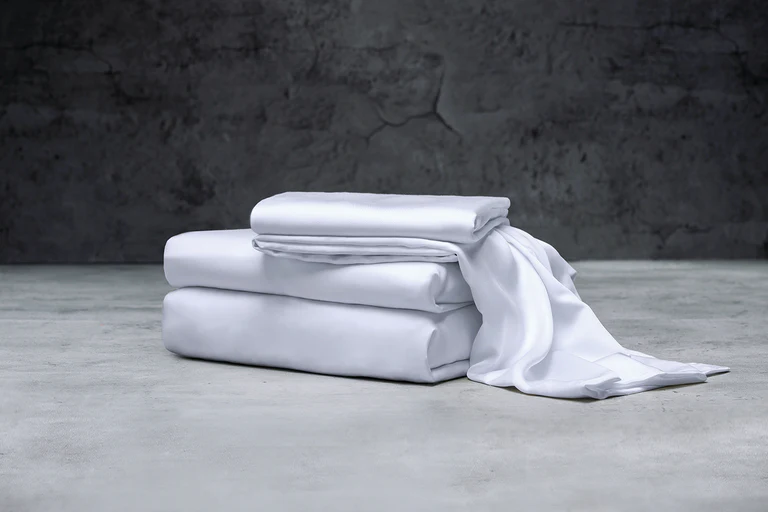
Your container of luxury sheet sets crossed the ocean for six weeks. The sheets themselves were flawless when they left the factory. Then the doors open at your warehouse, and the reality hits: damp cartons with soft, swollen corners. Sheet sets folded into wrinkled bricks. A faint musty smell on half the order. The manufacturer blames the shipping line. The shipping line blames the humidity. And you are left explaining to your customers why their “premium” sheets arrived looking anything but.
Here is the uncomfortable truth most bed sheet manufacturer conversations never touch: the sheet is only half the product. The other half is how it gets to you. Packaging and logistics decisions made on the factory floor determine whether your goods survive forklifts, stacking, container rain, and six weeks of salt air. A manufacturer that treats packing as an afterthought is gambling with your brand reputation, one container at a time. This guide walks you through exactly how professional sheet-set packaging and export logistics should work, what to demand in your purchase contract, and how to spot a factory that has this dialed in before you ever place an order.
Why Packaging Decides Your Landed Quality
Buyers audit thread count, สาน, and stitching during factory visits. Almost nobody audits the packing line. Yet industry experience shows that a meaningful share of quality complaints on imported bedding have nothing to do with weaving or sewing. They trace back to moisture, compression damage, carton failure, and contamination in transit. A fitted sheet with elastic that leaves the factory perfect can arrive with permanent creases if it was folded under pressure while damp, or yellowed if it sat against an acidic carton in a hot container.
The packing process starts long before anything goes into a box. Fabric must be fully cooled and conditioned after final pressing before folding. A sheet folded while still warm from the press traps moisture in the folds, and that moisture has nowhere to go inside a sealed polybag. Professional factories let finished goods rest in a climate-controlled packing area, often overnight, before folding begins. Ask your bed sheet manufacturer how long goods rest between pressing and packing. A vague answer is a red flag; a specific answer, like a defined rest period with humidity control, is a green one.
Light-colored sheets deserve special attention. White and ivory bedding shows every handling mark, every bit of carton dust, and every hint of yellowing. This is why packing procedures for white hotel-grade sheets are stricter than for printed retail sets, and why the best factories use separate, cleaner packing lines for white goods. If your line is white hotel sheets, treat the packing audit as non-negotiable.
How Sheet Sets Are Folded Before They Ever See a Box
Folding looks simple. It is not. Each piece in a sheet set has its own folding protocol, and the quality of the fold decides how the set looks when your customer opens it. Flat sheets are folded into rectangles with the finished hems aligned and visible. Fitted sheets are the hard part: the elastic corners must be tucked and folded so the elastic is not stretched or twisted in storage. A fitted sheet stored with its elastic under tension loses recovery over months on the shelf, and your customer notices a loose fit on their mattress.
Pillowcases are usually folded last and placed on top of the set so the opening design or hem detail faces up. In retail-ready packing, one pillowcase often becomes the outer wrap for the whole set, which means it takes the most handling and needs the cleanest fold. Factories that care use folding boards and jigs for consistency, so every set in the carton is the same size and shape. That uniformity matters more than it sounds: uniform folds stack evenly, stack evenly means cartons pack tightly, and tight cartons mean less shifting in transit.
Crease control is another quiet battleground. Hard fold lines pressed into cotton sateen become visible after washing, especially on darker colors. Good packing lines fold with rounded boards rather than sharp edges, and some factories interleave tissue paper on high-end sets to soften fold lines. If your brand sells on a “luxury unboxing” promise, ask about tissue interleaving and fold-board materials. It costs little at the factory and pays back in customer reviews.
Retail-Ready Packing Formats, and When Each Makes Sense
How the set is presented depends on your sales channel, and your manufacturer should offer you real options rather than one default. Kraft paper boxes with ribbon ties give an eco-premium feel that suits boutique and gift positioning; the box protects the set from scuffing and stacks beautifully on retail shelves. Pillowcase-band packing, where the set is wrapped inside one of its own pillowcases with a printed belly band, is the workhorse of mid-range retail: low material cost, attractive on the shelf, and the band carries your brand story.
PVC zip bags remain common for mass-market sets because they are cheap and let shoppers see the fabric. Their weakness is breathability: any residual moisture sealed inside a PVC bag becomes condensation, and condensation becomes mildew spots. If you choose PVC, insist on desiccant sachets inside every bag and confirm the factory’s rest-before-pack procedure. For e-commerce sellers, the plain polybag plus shipping box is often the most economical route, but the set must arrive looking intentional, not crumpled. A neatly folded set in a tight polybag, inside a snug shipping box, beats a sloppy set in fancy packaging every time.
Custom packaging is where your brand becomes visible before the product is even touched. Printed boxes, belly bands, care-card inserts, and branded stickers are all standard offerings at a full-service factory. The lead time question matters here: custom printed packaging typically adds two to four weeks to your production schedule because it runs on its own print timeline. Build that into your calendar. A reliable หนานทงอินเทกริตี้เท็กซ์ไทล์ partner will flag this early, not surprise you with it after you confirm the order.
Vacuum Packing: Space Saver or Moisture Trap?
Vacuum packing can cut your shipping volume by half or more, which is real money on ocean freight. A vacuum-packed sheet set ships flat and dense, maximizing container utilization. But vacuum packing done badly is worse than no vacuum packing at all. The physics are simple: compression plus trapped moisture plus weeks at sea equals mildew, permanent creases, and in extreme cases, fiber damage on delicate weaves like sateen.
The professional approach has three layers. อันดับแรก, moisture control before sealing: goods must be fully dry and rested, and many factories add a food-grade desiccant sachet per set even inside vacuum bags. ที่สอง, controlled compression: the vacuum should flatten, not crush. Over-compressed sets, especially percale and sateen, develop crease lines that survive washing. Ask the factory what compression ratio they target and whether they have tested wash-out of fold lines after vacuum storage. ที่สาม, bag quality: vacuum film must be thick enough to resist punctures from carton staples and handling. A punctured vacuum bag is just a flat bag, and you paid for compression you did not get.
Some products should never be vacuum packed. Embroidered or appliqued sheet sets can suffer crushed embroidery. Sets with delicate lace or scalloped hems deform under sustained compression. And any product where the “รู้สึกมือ” is the selling point deserves caution, because buyers equate a brick-hard vacuum block with cheapness, fairly or not. A thoughtful manufacturer will tell you when vacuum packing is wrong for your product, even though it costs them the freight-saving argument. That honesty is worth more than the freight.
Export Cartons That Actually Survive a Forklift
The export carton is your product’s armor, and most buyers never specify it. Standard practice is double-wall corrugated board, but “double-wall” covers a wide range of quality. The numbers that matter are bursting strength and edge crush resistance. For sheet sets, which are dense and heavy per carton, insist on cartons rated for stacking: your cartons will sit at the bottom of a container stack with hundreds of kilos above them. A carton that looks fine at the factory and collapses under a three-high stack in the container is a failure you discover too late.
Carton sizing deserves a conversation of its own. Cartons should be sized so sets fit snugly with minimal void space. Void space lets sets shift, shifting causes corner damage and crushed retail boxes, and crushed retail boxes get rejected by your retailer’s receiving dock. ในเวลาเดียวกัน, overstuffed cartons bulge, and bulging cartons do not stack squarely, which cascades into unstable container loads. The right carton is the one designed around your folded set dimensions, not a stock size the factory had lying around.
Markings on the carton are a logistics tool, not decoration. Every carton should carry the item number, สี, ปริมาณ, carton number in the sequence, gross and net weight, ขนาด, and handling marks like “keep dry” และ “do not stack above” limits. Barcodes matching your warehouse system save receiving time and errors. If you sell to big-box retailers, their routing guides dictate carton and pallet specs down to the label placement. A manufacturer experienced in export retail will know this; one that mostly serves domestic trade may not. Confirm before you commit.
Container Loading: The Last Mile Inside a Steel Box
A perfectly packed carton can still be ruined inside the container. Container rain, the condensation that forms on container ceilings when temperatures swing during ocean transit, drips onto top-layer cartons and soaks through. The defenses are well known: container desiccant poles or blankets that absorb airborne moisture, proper ventilation checks before loading, and never loading cartons directly against container walls where condensation runs. Ask your factory whether they place desiccants in every container and whether they inspect containers for cleanliness, dryness, and odor before loading. A container that previously carried chemicals or seafood can contaminate bedding through odor alone, and no packaging fully prevents it.
Loading patterns matter. Cartons should be stacked in interlocking patterns that distribute weight, with the heaviest cartons at the bottom. Mixed-SKU containers need a loading plan so that first-unloaded cartons sit near the doors. Palletized loading costs more in container space but dramatically reduces handling damage and speeds up your warehouse receiving; floor-loaded containers maximize cube utilization but every carton gets hand-carried at both ends. For high-value sheet sets, palletization is usually worth the trade. โรงงานของเรา plans container loading around your receiving reality, not around whatever is easiest at the dock.
Timing inside the container is the hidden variable. Goods loaded on a Friday that sit in a sealed container over a hot weekend at the port bake before the voyage even starts. Professional logistics teams schedule loading close to vessel departure and avoid leaving loaded containers in direct sun. This is the kind of detail you only get from a manufacturer that manages its own export logistics rather than handing cartons to a forwarder and washing its hands. When you evaluate suppliers, ask who owns the goods until the container seals, and what happens in between.
What to Put in Your Purchase Contract
Packaging and logistics terms belong in writing, not in a WeChat conversation. Your purchase contract or order confirmation should specify the packing method per SKU, the retail packaging format and artwork version, the carton specification including board grade, the maximum cartons per container and loading pattern, desiccant requirements, and the inspection standard for packing. Define what “acceptable” means: ตัวอย่างเช่น, cartons intact with no moisture damage, vacuum bags sealed with no punctures, retail boxes uncrushed.
Build in a pre-shipment packing inspection. Many buyers inspect the product but never the packing, then discover the problems at their own warehouse. A packing-focused inspection checks fold quality, polybag sealing, desiccant placement, carton strength, markings accuracy, and container condition before loading. It costs a fraction of a full product inspection and catches the failures that product inspections miss. If you cannot send your own inspector, require the factory to photograph the packing line, the sealed cartons, and the loaded container, with carton numbers visible. Photo evidence is not as good as being there, but it is far better than trust alone.
ในที่สุด, agree on responsibility for transit damage before it happens. Define the handover point, usually FOB at the port of loading, and decide who arranges marine insurance and what it covers. Moisture damage claims are notoriously hard to settle because every party blames another. A contract that names the packing standard, the desiccant requirement, and the container inspection duty gives your claim a foundation. Without it, you are negotiating from memory against a shipping line’s terms and conditions.
คำถามที่พบบ่อย
How should bed sheet sets be packed to prevent mildew during ocean shipping?
The three essentials are dry goods before packing, desiccant inside every sealed bag and in the container, and container moisture absorbers for the voyage. Goods must rest after pressing until fully cooled and dry, vacuum or polybag sealing must not trap residual moisture, and the container should be inspected for dryness and fitted with desiccant poles. Specify all three in your order; moisture prevention is a system, not a single step.
Is vacuum packing safe for cotton sateen sheet sets?
It can be, with controlled compression and proper moisture control. The risks are permanent crease lines and crushed hand feel if compression is too aggressive, and mildew if any moisture is sealed in. Ask the factory about their compression ratio, whether they test fold-line wash-out after vacuum storage, and whether they include desiccants. Embroidered or lace-trimmed sets are generally better shipped uncompressed.
What carton specification should I require for export sheet sets?
Double-wall corrugated cartons rated for stacking, sized snugly around your folded sets to prevent shifting. Require bursting strength and edge crush ratings appropriate for dense, heavy bedding cartons, plus clear markings: รายการ, สี, ปริมาณ, carton sequence number, น้ำหนัก, ขนาด, and handling symbols. If you supply big-box retailers, follow their routing guide carton specs exactly.
Should I palletize my container or floor-load it?
Palletizing costs container space but reduces handling damage and speeds warehouse receiving; floor loading maximizes cube but means every carton is hand-carried at both ends. For high-value or retail-boxed sheet sets, palletization usually pays for itself in reduced damage claims and faster receiving. Discuss the trade-off with your manufacturer based on your product value and warehouse setup.
What is container rain, and how do I protect my sheets from it?
Container rain is condensation that forms on the container ceiling during temperature swings at sea and drips onto cargo. Protection includes container desiccants, keeping cartons away from direct contact with walls and ceiling, loading close to vessel departure, and inspecting containers for dryness before loading. Name the desiccant requirement in your contract so responsibility is clear.
How do I verify packing quality without visiting the factory?
Require a packing-focused pre-shipment inspection or detailed photo documentation: fold quality, sealed bags, desiccant placement, เครื่องหมายกล่อง, and the loaded container with carton numbers visible. Many third-party inspection firms offer packing audits as an add-on to product inspections. A manufacturer confident in its packing line will welcome this; resistance is information.
Ship Your Next Order With a Factory That Sweats the Packing Details
The difference between a sheet set that arrives picture-perfect and one that arrives as a claim form is rarely the weaving. It is the folding, the bagging, the carton, the desiccant, and the container, executed by people who treat packing as part of the product. When you choose a manufacturing partner, audit the packing line with the same seriousness you bring to the fabric. Your customers will never see the container, but they will feel everything it did to your sheets.
สิ่งทอที่ซื่อสัตย์ manufactures mid-to-high-end bedding in Nantong, จีน, with full control from fabric to finished packing, and we plan every order’s packaging and container loading around how your goods actually travel. To discuss packing specifications for your next sheet order, ติดต่อเรา at Alex@integritytex.com or WhatsApp +86 151 5289 1159. Tell us your channel, your climate route, and your damage history, and we will design the packing to beat it.