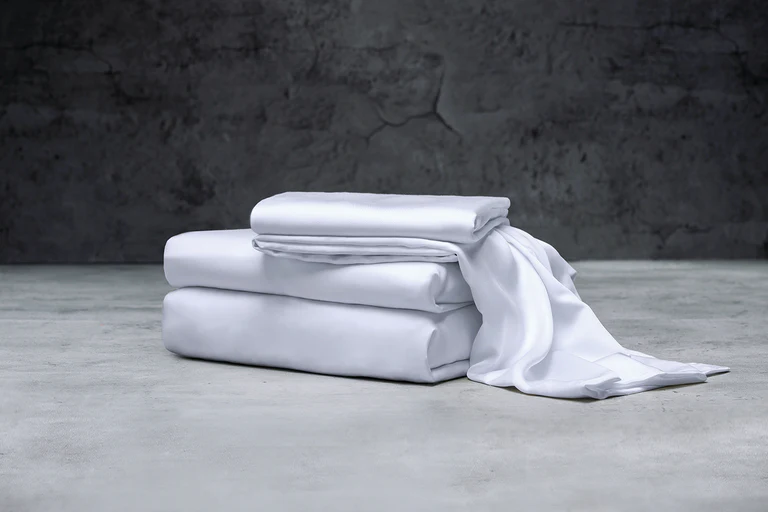
Bed Sheet Supplier Production Process: From Greige Fabric to Finished Sets
Most bedding buyers judge a supplier by its samples and its price, and both matter. But neither tells you what will actually happen once your order enters production. A sheet set passes through many hands and machines before it reaches a carton, and a weakness at any single stage can quietly become a customer complaint months later. If you have ever wondered why two suppliers quoting the same fabric can deliver sheets that feel, fit, and wash so differently, the answer is usually found in the production process itself, not in the fabric name on the quotation.
Understanding that journey, from greige fabric to a finished, packed set, gives you a practical advantage. It helps you ask better questions, spot unrealistic lead time promises, and understand where quality is created rather than merely checked at the end. ইন্টিগ্রিটি টেক্সটাইল is a mid-to-high-end home textile manufacturer based in Tongzhou, নান্টং, জিয়াংসু, founded on 4 March 2007, producing sheet sets, duvet কভার সেট, quilted বিছানাপত্র, কাপড়, হোটেল লিনেন, কম্বল, and pillows for OEM and ODM customers. This guide walks through the production stages your sheets will go through, and explains what a careful buyer should look for at each one.
It Starts Before Cutting: Fabric Selection and Preparation
Production does not begin at the cutting table. It begins with fabric selection, because every later stage inherits the strengths and weaknesses of the cloth. For sheet sets, buyers typically choose between cotton, cotton blends, লিনেন, bamboo-derived fibres, টেনসেল, এবং ফ্ল্যানেল, each with a different hand feel, washing behaviour, and price position. The fabric must suit the end use: a crisp hotel sheet, a soft brushed winter sheet, and a breathable summer sheet are different products, even when they share the same size. A supplier that asks about your market, your retail price position, and your care-label expectations before recommending a fabric is doing you a favour. A supplier that simply offers the cheapest available cloth is storing up problems for your customers.
Greige fabric, the unfinished cloth that comes off the loom, must then be prepared, dyed or printed, and finished before it can be cut. Dyeing and printing determine colour accuracy and colour fastness, while finishing affects softness, মসৃণতা, এবং মাত্রিক স্থিতিশীলতা. This is also the stage where shade control matters most. Fabric is produced in dye lots, and small variations between lots are normal. A disciplined factory groups fabric by lot, checks shade under standard lighting, and keeps lots separate through cutting so that the pieces of one set come from compatible cloth. When that discipline slips, a buyer receives sets in which a pillowcase looks slightly different from its sheet, and no amount of careful sewing can fix it afterwards.
কাটিং: Where Size Accuracy Is Won or Lost
Cutting looks simple, and that is exactly why it deserves attention. Layers of fabric are spread on a cutting table, patterns are laid out, and the cloth is cut into panels for flat sheets, লাগানো শীট, and pillowcases. If the spreading is uneven, if the fabric is stretched while being laid, or if the pattern is placed carelessly, the finished pieces will vary in size even though they were cut from the same marker. লাগানো শীট জন্য, the problem is magnified, because pocket depth and elastic length must match the mattress depth your customers actually use. A sheet that measures correctly on the table but shrinks beyond tolerance in the wash will still fail in the customer’s bedroom.
Good cutting practice includes relaxing fabric before cutting where needed, checking the marker against the specification for each size, and measuring first-cut pieces before the rest of the lay is cut. It also includes keeping size runs separate and labelled, so that a king flat sheet cannot drift into a queen carton later. Buyers rarely visit the cutting room, but they feel its work every time a customer says a sheet fits perfectly or complains that it does not. When you discuss an order, ask your supplier how cutting accuracy is checked and how shrinkage is accounted for in the cut size. The answer will tell you more about the factory than a brochure ever will.
Sewing and Hemming: The Craft Inside Every Seam
Sewing transforms flat panels into products. Flat sheets are hemmed, fitted sheets are shaped with corner seams and elastic, pillowcases are formed with hems and closures, and duvet covers, where included, are assembled with their own closures and internal ties or buttons. Each seam has a job: it must hold under tension, survive repeated washing, and look neat enough for a retail shelf. সেলাই ঘনত্ব, thread choice, seam type, and operator skill all contribute. A hem that looks fine when flat can pucker after washing if the stitch tension was wrong, and a fitted sheet corner that looks tidy can fail if the elastic was not attached evenly.
This is the stage where production discipline is most visible in the finished product. Experienced operators, well-maintained machines, and inline checks at each workstation produce consistent seams. Rushed work produces skipped stitches, uneven hems, and corners that vary from piece to piece. A factory that inspects work as it moves between stations, rather than only at the end of the line, catches these faults while they can still be corrected cheaply. When you evaluate a supplier, ask what inline checks are performed during sewing, and how a faulty piece is handled. A clear, specific answer is a good sign. A vague promise of good quality is not evidence of anything.
ফিনিশিং, টিপে, and Final Inspection
After sewing, sheets are trimmed, threads are removed, and pieces are pressed or finished to give them the smooth, retail-ready appearance your customers expect. Pressing is not cosmetic alone. It reveals faults that were hidden in the sewing stage, such as slight puckering, uneven hems, or print defects that only show when the fabric lies flat. Final inspection then checks the complete set as your customer will receive it: components present and correct, sizes measured, seams examined, appearance checked under good lighting, and labels verified for fibre content, যত্ন নির্দেশাবলী, and size information.
Packing is the last production step, and it is more important than it looks. Sets must be folded consistently, packed in the correct assortment, and protected against moisture and transit damage. Carton markings must match the packing list exactly, because a packing error at the factory becomes a picking error at your warehouse and a missing-item complaint from your customer. A supplier that treats packing as part of quality, with its own checks, will save you more time than any discount ever will. The difference between a factory that packs carefully and one that packs hurriedly is measured in your warehouse labour, your return rate, and your retail relationships.
How the Stages Connect, and Why Lead Time Honesty Matters
None of these stages exists in isolation. A delay in fabric preparation pushes cutting back. A cutting error discovered late forces re-cutting and disrupts the sewing schedule. A sewing fault found at final inspection requires rework that competes with other orders for machine time. That is why honest lead time discussion matters so much. A supplier that promises an impossibly short schedule for a complex order is either planning to rush a stage, to subcontract quietly, or to miss the date. A supplier that explains the sequence, identifies the longest stage for your order, and gives you a realistic schedule is protecting your launch date, not just quoting a number.
Buyers can use this understanding in negotiation. Instead of asking only for a lower price, ask which stage drives the cost for your specification, and whether a change in fabric, নির্মাণ, or packing would change it. You can learn about the background and capabilities of নান্টং ইন্টিগ্রিটি টেক্সটাইল as you frame those questions, and you will find that a supplier who can explain its process can also explain its price. That transparency is valuable, because it lets you make trade-offs deliberately: a simpler hem, a different fabric finish, or a different packing method, chosen by you, rather than a hidden corner cut by someone else.
Working With a Supplier That Explains Its Process
The best supplier relationships are built on process transparency. Before you confirm an order, ask for a production flow summary for your product: fabric source and preparation, cutting method, sewing construction, সমাপ্তি, inspection stages, and packing method. Ask how problems are escalated when a stage fails its check, and how you will be informed. আমাদের কারখানা follows a “লক্ষ্য মূল্য সম্মান করুন” one-price model, in which the buyer names one price and the factory answers yes or no. Process clarity works the same way: agree the product and the process once, in detail, and then let production follow the agreed path. When both sides understand the journey from greige fabric to finished set, there are fewer surprises, fewer disputes, and a much better chance that the tenth shipment is as good as the first.
প্রায়শই জিজ্ঞাসিত প্রশ্নাবলী
What is greige fabric, and why should buyers care?
Greige fabric is unfinished cloth straight from the loom, before dyeing, মুদ্রণ, বা সমাপ্তি. Buyers should care because the quality, preparation, and finishing of that cloth determine the colour, অনুভব, সংকোচন, and durability of the finished sheet. The fabric stage sets the ceiling for everything that follows.
Which production stage causes the most sheet defects?
There is no single answer, because defects can arise at any stage. Cutting errors cause size problems, sewing errors cause seam and hem problems, and fabric preparation problems cause shade and shrinkage problems. That is why inspection should happen during production, not only at the end.
Why do sheets from the same order sometimes vary in shade?
Shade variation usually comes from fabric dye lots. Small differences between lots are normal, and they become visible when pieces from different lots are packed into one set. A disciplined factory groups fabric by lot and keeps lots separate through cutting and packing.
How can I check a supplier’s production process before ordering?
Ask for a written production flow for your product, including inspection stages, and ask specific questions about cutting checks, sewing checks, and final inspection. সম্ভব হলে, visit the factory or request a video walkthrough of the relevant production areas. Specific answers are more trustworthy than general assurances.
Does a faster production schedule mean lower quality?
অগত্যা নয়, but an unrealistically short schedule is a warning sign. Every stage takes time, and rushing one stage usually creates defects that must be reworked later. A realistic schedule that explains the longest stage is a sign of honest planning.
What should I include in my specification to protect production quality?
Include fabric type and finish, finished and cut sizes with tolerances, shrinkage limits, seam and hem construction, stitch requirements, লেবেলিং, packing method, and inspection stages. The more of the process you specify, the fewer assumptions the factory must make on your behalf.
Ready to Source Sheets From a Transparent Process?
A sheet set is not just a fabric and a price. It is the result of a chain of decisions, from fabric preparation through cutting, সেলাই, সমাপ্তি, পরিদর্শন, and packing, and every link in that chain affects what your customer receives. Choose a supplier that can walk you through that chain clearly, and your sourcing becomes more predictable, your returns fall, and your brand earns trust one bedroom at a time. If you are sourcing sheet sets, duvet কভার সেট, or hotel linen and want to discuss fabric, নির্মাণ, and production for your range, আমাদের সাথে যোগাযোগ করুন আজ. Reach us at Alex@integritytex.com, হোয়াটসঅ্যাপ +86 151 5289 1159, or through www.integritytex.com. INTEGRITY TEXTILE operates from about 30,000 square metres with around 143 কর্মী, monthly capacity of about 40,000 sheet sets and 25,000 duvet কভার সেট, and certifications including ISO9001, ISO14001, ISO45001, এবং OEKO-TEX স্ট্যান্ডার্ড 100. Send us your specification, and we will give you a clear, honest answer about what we can produce for you.