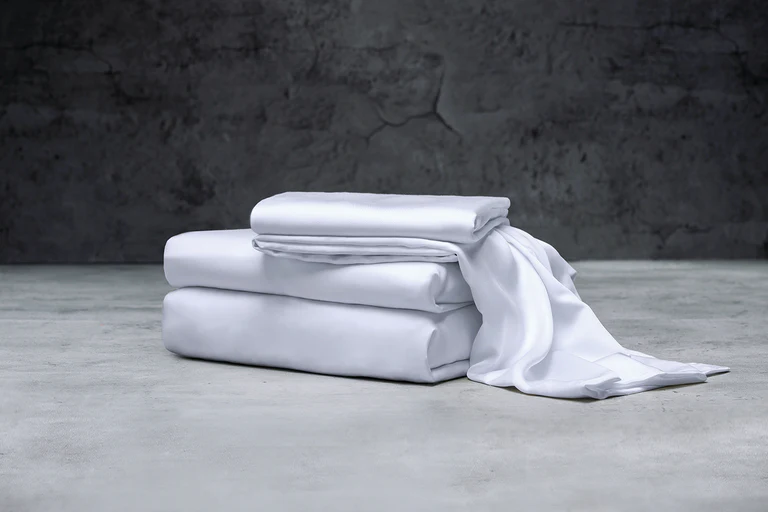
If you have ever compared quotations from bed sheet wholesalers and wondered why two offers for what looks like the same sheet set are so far apart, you are not alone. Importers, ब्रान्डहरू, e-commerce sellers and hotel buyers run into the same frustration every sourcing season: one supplier quotes a price that fits the retail plan perfectly, another quotes far more for a product with an almost identical description, and a third quotes far less but cannot explain what has been left out. The problem is rarely dishonesty. More often, it is that the quotation itself hides the real story. A single unit price tells you nothing about the fabric weight, बुनाई, the finishing, the stitching, the packaging or the freight behind it, and without that breakdown you cannot tell whether you are comparing like with like, or whether a low price today will become returns, complaints and reorders tomorrow.
This guide breaks down wholesale bed sheet cost the way a buyer should read it: component by component, in plain language, so you can ask better questions, spot hidden trade-offs and judge a quotation on value rather than on the lowest number alone. It is written for buyers who need sheets that will survive repeated washing, hold their colour and size, and arrive on time in the quantities their business actually needs.
Why Wholesale Sheet Prices Vary So Much
Bed sheets look simple, but they are one of the most specification-sensitive products in home textiles. A small change in fibre, धागो, weave density, fabric weight, dyeing method or sewing standard can move the cost materially, while leaving the product photo almost unchanged. Two flat sheets can look identical online and feel very different after ten washes. One may stay smooth, keep its dimensions and hold its colour, while the other pills, thins at the folds or shrinks enough to no longer fit the mattress it was made for.
That is why experienced buyers do not start with price. They start with a specification sheet: fibre content, construction, fabric weight, dimensions including pocket depth for fitted sheets, hem and elastic details, colour fastness expectations, प्याकेजिङ, and inspection standard. Once those points are fixed, quotations become comparable. Until they are fixed, the cheapest offer is often simply the offer with the most specification removed.
The Cost Breakdown: Six Components Behind Every Quotation
Almost every wholesale bed sheet quotation, whether it is presented as a single figure or split into lines, is built from the same six blocks. Understanding each block helps you see where value is being added and where corners could be cut.
1. कपडा: Usually the Largest Share of Cost
Fabric is normally the largest single cost in a bed sheet, because a sheet set uses a large area of cloth and the cloth itself carries most of the performance. Fibre choice matters first. कपास, लिनेन, bamboo-derived fibre, Tencel and flannel each bring a different hand feel, सास फेर्न सक्ने क्षमता, durability and care profile, and each is priced differently as a raw material. Within cotton alone, fibre length, yarn quality and spinning method affect softness, strength and pilling resistance. Longer-staple cotton yarns generally spin into smoother, stronger yarns, which is one reason buyers who prioritise a premium hand feel often specify them explicitly rather than accepting a generic cotton description.
Weave and construction come next. पर्केल, वर्षा, twill and jersey constructions do not just feel different; they use yarn differently, weave at different speeds and finish differently. A denser, more tightly woven fabric generally uses more yarn per square metre and takes longer to produce, so it costs more than a lighter, looser cloth of the same fibre. Fabric weight is therefore a useful cross-check: if two quotations claim the same fibre and weave but one is noticeably lighter, the lighter cloth is not the same product, even if the description sounds the same.
For buyers sourcing at scale, working with a manufacturer that controls fabric selection and production in-house makes this comparison far easier. Nantong अखंडता कपडा is a mid-to-high-end home textiles manufacturer and exporter based in Tongzhou, नान्टोङ, जियाङसु, producing sheet sets, duvet and quilt sets, रजाई भएको ओछ्यान, कपडा, होटल लिनेन, blankets and pillows, so fabric decisions can be discussed as part of the product specification rather than treated as a fixed, unexplained input.
2. धागो, Weave and Construction: Where Durability Is Decided
After fibre, the way yarn is made and woven decides how long a sheet will last. Finer yarns can create a smoother surface, but they must be strong enough to withstand weaving, dyeing and repeated home laundering. Weave density, yarn count and fabric weight together determine whether a sheet feels substantial or thin, whether it drapes well, and whether it is likely to tear at stress points such as fitted corners and hems.
Construction details that buyers sometimes overlook also carry cost. A fitted sheet needs a deep enough pocket, strong elastic that retains its stretch, and reinforced corners if it is to stay in place on thicker modern mattresses. A flat sheet needs a hem that lies flat and does not twist after washing. Pillowcases need a closure that stays neat without adding bulk. None of these details shows clearly in a catalogue photo, but all of them show up in customer reviews after the first few washes, which is why they belong in the specification before price is discussed.
3. Dyeing, Printing and Finishing: Colour, Feel and Wash Performance
Dyeing and finishing are where a sheet gains its colour and its final hand feel, and where a surprising amount of cost variation hides. Reactive dyeing, pigment dyeing and printing each involve different chemicals, water, energy, equipment time and quality control, and each gives a different result for colour depth, colour fastness and softness. A colour that looks rich in a sample can fade unevenly if the dyeing process, fixation and washing steps are shortened to save cost.
Finishing treatments also matter. Softening, गायन, calendaring and other finishing steps affect smoothness, surface cleanliness and the way a sheet feels on first touch. Skipping or shortening finishing can lower the quotation, but it can also leave a sheet feeling rougher, pilling sooner or looking less refined after laundering. Buyers sourcing for brands and hotels should therefore ask not only for a colour swatch, but also for wash and colour fastness information and for a laundered sample where possible. A sample that has been washed several times tells you far more about true cost than a sample fresh from the finishing line.
4. काट्दै, Sewing and Quality Control: The Labour Behind a Clean Finish
Cutting and sewing may look like a smaller share than fabric, but they decide whether a sheet set is consistent from piece to piece. Accurate cutting keeps dimensions stable across a production run, so a fitted sheet ordered as a particular size actually fits that size every time. Careful sewing keeps seams straight, hems even and elastic tension consistent. Inconsistent sewing does not just look untidy; it creates weak points that fail first in use.
Quality control is part of this block, not an optional extra. Inspection of greige fabric, in-process checks during cutting and sewing, and final inspection of finished sets catch issues such as fabric defects, shade variation between pieces in the same set, incorrect dimensions, broken stitches and packaging errors before shipment. A supplier that inspects thoroughly will sometimes quote slightly more than a supplier that inspects lightly, but the difference is usually far smaller than the cost of handling returns, replacements and lost retail listings when defective goods reach customers. Ask how inspection is done, what standard is applied, and what happens to pieces that fail, because those answers reveal how seriously a supplier treats consistency.
Scale and experience help here. A factory with established production lines and a stable workforce can hold sewing standards steady across larger orders, whereas a very small or overloaded workshop may struggle to keep the same standard from the first carton to the last. That is one reason buyers often prefer to discuss capacity openly before placing a large order, rather than discovering a bottleneck halfway through production.
5. प्याकेजिङ: Small Line, Real Impact on Landed Cost and Presentation
Packaging is often treated as an afterthought, yet it affects freight, damage rates and retail presentation all at once. A sheet set packed in a simple polybag costs less and takes less space than the same set packed in a printed gift box, a fabric bag, a PVC bag with an insert card, or a set with belly bands and hang tags. Each option adds material, labour and volume, and volume directly affects how many sets fit in a carton and in a container.
For e-commerce sellers, packaging also affects the unboxing experience and the likelihood of damage in transit. For hotel buyers, simple, टिकाउ, easy-to-open bulk packaging may matter more than retail presentation. For brands, consistent colour printing, accurate labelling, barcodes and care labels are part of the product, not decoration. The right choice depends on the sales channel, so packaging should be specified and quoted as its own line where possible, rather than assumed. If a quotation does not state the packaging, ask for it in writing before confirming, because changing packaging after production has started is far more expensive than choosing it correctly at the start.
6. Freight, Duties and Order Size: Why the Same Sheet Costs More in a Small Order
The final block is logistics, and it is the block most likely to surprise a first-time importer. Freight cost depends on volume, वजन, उत्पत्ति, destination, mode of transport and timing, and a bulky product such as bedding fills containers quickly. A quotation that looks attractive on a factory-gate basis can become far less attractive once sea freight, inland transport, insurance, भन्सार निकासी, duties and destination handling are added. Always confirm which trade term the quotation uses, so you know exactly where the supplier’s responsibility ends and yours begins.
Order size interacts with every earlier block. Larger orders spread fixed costs such as sampling, pattern making, dyeing setup, printing plate or screen preparation, and inspection setup across more units, so the unit cost generally falls as quantity rises. Smaller orders, by contrast, carry those fixed costs across fewer pieces, and may also require a supplier to interrupt a larger production run or to dye a smaller, less efficient batch. Minimum order quantities exist for this reason, not as a bargaining tactic. Understanding this helps buyers plan ranges sensibly: consolidating colours and sizes, or ordering a core range in volume and testing new colours in smaller quantities, often delivers a better overall landed cost than splitting many tiny orders across many specifications.
How to Read a Quotation Like a Buyer, Not a Price Shopper
A useful quotation answers more than the unit price. It should state the fibre and construction, fabric weight, आयामहरू, colour and dyeing method, sewing and elastic details, प्याकेजिङ, inspection standard, trade term, नेतृत्व समय, payment term and validity period. If several of those points are missing, the quotation is not yet comparable with another offer, however attractive the number looks.
Start by aligning specifications across suppliers. Send the same specification sheet to each wholesaler and ask for any deviation to be flagged explicitly. Then compare the breakdown, not just the total: where is one supplier spending more, and does that spending buy durability, colour performance or consistency that your customers will notice? A higher fabric weight or a more thorough finishing process may be worth paying for if it reduces returns. A more elaborate retail box may not be worth paying for if your channel sells in bulk to hotels.
अर्को, check the total landed cost, not just the factory price. Add freight, duties, insurance and local handling on a like-for-like basis, and consider the cost of quality failures as well. A low factory price plus high return rates, replacement shipments and customer service time is rarely the cheapest outcome over a season. अन्तमा, confirm lead time and capacity. A supplier that cannot produce your quantity within your selling window, however good its price, is not a viable supplier for that season.
Buyers who prefer a direct, transparent conversation about target pricing will find that approach familiar at पूर्णता कपडा, which works on a Respect target price model: the buyer names a target price, and the factory answers yes or no, rather than stretching a specification silently to meet a number. That clarity helps both sides avoid the most common sourcing disappointment, which is a product that meets a price but no longer meets the original brief.
Questions That Reveal the True Cost Breakdown
Before you confirm an order, a short set of questions can save a season of problems. Ask what fibre and yarn are actually used, and whether a generic description hides a blend. Ask for fabric weight and construction in writing, not just a feel description. Ask how colour fastness is tested and whether a laundered sample can be provided. Ask what packaging is included, how many sets are packed per carton, and what the carton dimensions and weight are, because those figures drive freight. Ask what inspection standard applies and how defects are handled. Ask about minimum order quantity per colour and per size, and how unit cost changes if you consolidate colours or increase quantity.
Also ask about capacity and communication. A manufacturer founded in 2007, with around 30,000 square metres of production space and around 143 staff, and monthly capacity of around 40,000 bedding sets and around 25,000 duvet sets, can discuss realistic lead times for larger programmes without guessing. Certifications also form part of the background picture: ISO9001, ISO14001, ISO45001 र OEKO-TEX मानक 100 indicate management systems and testing frameworks that many brand and hotel buyers look for when qualifying a supplier. They do not replace product inspection, but they help a buyer judge whether a factory is set up to deliver consistently.
अन्तमा, ask for a pre-production sample made to the confirmed specification, and check it against the original brief before bulk production begins. The sample stage is where misunderstandings about fabric, colour, size and packaging are cheapest to fix. Once bulk fabric is dyed and cut, the same change becomes expensive, slow and disruptive for both sides.
Choosing a Wholesaler for the Long Term
The cheapest bed sheet wholesaler for a single order is not always the best partner for a growing range. A long-term partner helps you develop specifications that suit your market, warns you when a requested change will hurt wash performance or increase freight disproportionately, and keeps quality steady as volumes grow. That advice is valuable precisely because it sometimes means recommending a slightly higher specification, or a consolidated order, rather than simply accepting the lowest brief.
For brands, that partnership also protects the brand itself. Sheets are used every night, washed frequently and judged harshly when they fail. A sheet that pills, fades or shrinks does not just cost a refund; it costs trust, and trust is far harder to recover than a small saving on unit cost. For hotel buyers, the stakes are similar: consistent size, colour and durability across hundreds of rooms matter more than a marginal saving on a single set, because inconsistency is visible to every guest.
Working directly with a manufacturer, rather than through layers of intermediaries, can also make the breakdown clearer. When the factory that makes the fabric, cuts the sheet and packs the set is the same party answering your questions, there are fewer places for specification details to be lost in translation. Our factory offers OEM and ODM service across sheet sets, रजाई भएको ओछ्यान, fabrics in cotton, लिनेन, बाँस, Tencel and flannel, होटल लिनेन, blankets and pillows, so buyers can develop a private-label range or adapt an existing construction to their own market, with the specification discussed openly from the start.
बारम्बार सोधिने प्रश्नहरू
Why do quotations from bed sheet wholesalers differ so much for similar products?
Quotations differ mainly because specifications differ, even when product names sound the same. Fibre, yarn quality, बुनाई, fabric weight, dyeing method, परिष्करण, sewing standard, packaging and inspection all move cost, and a quotation that omits those details can look cheaper simply because it leaves them out. Aligning a written specification across suppliers is the fastest way to make quotations truly comparable.
What is the largest cost component in a wholesale bed sheet?
Fabric is usually the largest component, because a sheet set uses a large area of cloth and the cloth determines feel, durability and wash performance. Fibre choice, yarn quality, weave and fabric weight together drive most of the fabric cost, which is why changing fabric is the most effective way to change either price or quality, but also the change most likely to affect customer satisfaction.
Does ordering more always lower the unit cost?
Generally yes, up to a point, because fixed costs such as sampling, dyeing setup and inspection setup are spread across more units. Consolidating colours and sizes usually helps more than simply increasing total quantity across many fragmented specifications. Ask your supplier how unit cost changes at different quantity breaks, so you can plan your range around the most efficient volumes.
How does packaging affect the total cost?
Packaging affects material and labour cost, carton volume, freight cost and damage rates. Retail-ready boxes and bags cost more and take more space than simple bulk packaging, but they may be essential for a brand or e-commerce channel. Specify packaging explicitly in the quotation and confirm sets per carton, carton size and weight, so freight can be calculated accurately.
What should I check before confirming a wholesale bed sheet order?
Check the full specification in writing, including fibre, construction, fabric weight, dimensions and pocket depth, colour and dyeing method, sewing and elastic details, प्याकेजिङ, inspection standard, trade term, lead time and payment term. Request a pre-production sample to the confirmed specification, and check a laundered sample where possible, before bulk production begins.
Can I give a target price and have the factory work to it?
हो, if you work with a supplier that uses a target-price approach. Under the Respect target price model, you name the target price you need to meet, and the factory answers yes or no based on whether that price can be met without compromising the agreed specification. That honest answer, given early, prevents the common problem of a product that meets a price only by quietly losing the qualities your customers wanted.
Start With a Clear Specification, Not Just a Price Request
If you are sourcing bed sheets for import, for a brand, for e-commerce or for hotels, the most profitable step you can take is also the simplest: write down the specification your customers actually need, share it openly, and ask for a cost breakdown against it. You will quickly see which wholesalers understand fabric, construction, finishing and logistics, and which ones are simply quoting a number. The right partner will welcome that conversation, flag trade-offs honestly, and help you choose the specification that gives your customers the best balance of feel, durability and landed cost.
To discuss your bed sheet specification, लक्ष्य मूल्य, quantities and packaging, हामीलाई सम्पर्क गर्नुहोस् at Nantong Integrity Textile. You can reach Alex at Alex@integritytex.com, on WhatsApp at +86 151 5289 1159, or via www.integritytex.com. Share your target sizes, colours, fabric preferences and order quantities, and the factory team will advise whether your target price can be met to the specification you need, and what options exist if it cannot, so you can plan your range with confidence.