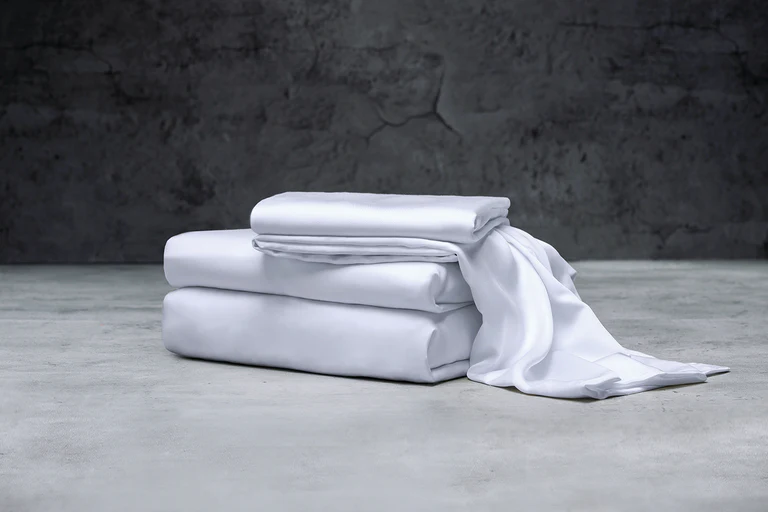
Every bedding buyer remembers the order that looked perfect in the sample room and unravelled after delivery. The flat sheet that came back from the first wash a size smaller. The white set that turned grey beside the next production lot. The fitted sheet whose elastic gave up after a few months in a hotel laundry. The supplier had a polished catalogue, a fast reply, and a competitive quotation, but nobody had walked the factory floor with a checklist in hand and asked how the sheets were actually made, tested, and measured before they were packed.
That is the expensive difference between choosing bed sheets wholesale suppliers from a catalogue and auditing one as a factory. A trading company can show you samples. Only a factory audit shows you weaving, রঞ্জনবিদ্যা, সমাপ্তি, কাটা, সেলাই, পরিদর্শন, and packing as one connected system, and whether that system holds up when your order is not the small, carefully prepared sample but a full container produced under time pressure. আমদানিকারকদের জন্য, ব্র্যান্ড, ই-কমার্স বিক্রেতারা, and hotel buyers, the audit is not bureaucracy. It is the cheapest insurance you will ever buy, because it finds the problems while they are still correctable, before they become returns, chargebacks, lost listings, and disappointed guests.
This factory audit checklist is written specifically for bed sheets. It does not repeat a generic supplier questionnaire. It follows the sheet itself, from yarn and greige cloth through dyeing and finishing, কাটা এবং সেলাই, washing and colour testing, size verification, capacity planning, and documentation, so you can judge whether a wholesale supplier can repeat the quality you approved, lot after lot, at the volume you actually need.
Why a Sheet-Specific Audit Matters More Than a General Factory Visit
A general factory tour tells you whether a building looks tidy and busy. It does not tell you whether a percale sheet will stay crisp, whether a sateen sheet will keep its sheen, whether a fitted sheet will still fit a deep mattress after laundering, or whether the colour you approved in one season will match the next. Sheets fail in sheet-specific ways, and those failures are usually decided long before sewing begins, in choices about yarn, বুনা, রঞ্জনবিদ্যা, সমাপ্তি, and shrinkage control that are invisible in a finished, folded sample.
A sheet-specific audit therefore asks different questions. It asks to see the greige cloth before dyeing, not only the finished set on a display bed. It asks how the factory measures shrinkage, rather than accepting a promise that shrinkage is low. It asks to see the size chart actually used at the cutting table, the tolerance applied at final inspection, and the records kept for each production lot. If a supplier cannot show you those things, you have learned something important, even if the showroom looks impressive.
The Checklist at a Glance: Six Areas to Verify Before You Confirm an Order
- Weaving and greige cloth: সুতা, weave structure, ফ্যাব্রিক ওজন, and defect control before dyeing or printing.
- ফিনিশিং: রঞ্জনবিদ্যা, নরম করা, and finishing steps, and how each step is controlled and recorded.
- Shrinkage and colourfastness testing: laboratory methods, retained samples, and pass criteria agreed before production.
- Sizing consistency: কাটা, সেলাই, elastic, and hem control across sizes, colours, and lots.
- Capacity verification: real looms, dyeing and sewing capacity, and scheduling honesty for your delivery date.
- Documentation and compliance: licences, সার্টিফিকেশন, পরীক্ষার রিপোর্ট, and traceability from yarn to packed carton.
Work through the six areas in that order during a visit, or use them as the structure for a video audit and document request if you cannot travel. The goal is not to catch a supplier out. It is to confirm, with evidence, that the factory you choose can make the sheet you approved again and again.
1. Weaving and Greige Cloth Checks: Where Sheet Quality Is Decided
Start in the weaving area, or with the greige stock if the factory buys greige cloth. Ask what yarn is used, what weave structure the sheet is built on, and how fabric weight is checked. For a plain percale sheet, the weave should feel even and stable, with no thin stripes, thick places, or broken yarns running through the cloth. For a sateen sheet, the surface should be smooth and even, without streaks where the weave has shifted. These defects are easy to spot in greige cloth under good light and very hard to hide once the fabric is dyed, which is why an honest factory will show you greige without hesitation.
Ask how the factory inspects incoming yarn and greige cloth, how often it checks fabric weight and construction during a run, and what happens to cloth that fails. Look for a written inspection standard, a defect marking system, and a clear rule for segregating rejected rolls, rather than a verbal assurance that quality is good. Ask to see the fabric library for the constructions the factory runs regularly, and compare the hand feel and weight of the greige with the finished sheet you approved. A large gap between the two is a warning that finishing, rather than fabric quality, is doing the work, and finishing alone rarely survives repeated laundering.
Factories with their own weaving and finishing under one roof can answer these questions with production records, not only samples. ইন্টিগ্রিটি টেক্সটাইল manufactures sheet sets, duvet and quilt sets, quilted বিছানাপত্র, কাপড়, হোটেল লিনেন, কম্বল, এবং বালিশ, তুলা সহ, লিনেন, বাঁশ, টেনসেল, and flannel fabrics, so weaving, রঞ্জনবিদ্যা, সমাপ্তি, and sewing can be checked as one accountable process rather than as separate subcontracted steps.
Questions to Ask at the Loom and in the Greige Store
- Which yarn and weave construction is used for this exact sheet, and can you show it in greige form?
- How is fabric weight and construction checked during production, and how often?
- How are weaving defects marked, recorded, and removed before dyeing?
- What happens to a roll that fails inspection, and who has authority to reject it?
- Is the greige for my order woven in-house, held in stock, or bought in, and what changes if it is bought in?
2. Finishing Checks: ডাইং, Softening, and the Steps That Change Hand Feel
Finishing is where a sheet gains its colour, কোমলতা, এবং drape, and where many short-term impressions are created. A heavily softened sheet can feel luxurious in the showroom and lose that feel after a few washes if the softening was used to mask a coarse base cloth. During the audit, ask the factory to walk you through its dyeing and finishing route for your construction, ধাপে ধাপে, and to explain what each step is intended to achieve and how it is controlled.
For dyed sheets, check colour management first. Ask how the laboratory matches your approved colour, how many laboratory dips are made before bulk approval, and how bulk production is compared with the approved standard. Look for a retained standard sample, a light source used for colour comparison, and a rule for what happens when a bulk lot falls outside the agreed shade tolerance. For striped, checked, or printed sheets, ask how pattern alignment is controlled across the width of the fabric, because a pattern that drifts at the edge becomes a visible fault in a finished sheet.
For finishing chemicals and softeners, ask what is used, whether it is compatible with the fibre and the end use, and whether the factory can provide test evidence that the finish does not compromise colourfastness or create an unpleasant odour after packing. Hotel buyers should ask specifically about finishes that must survive commercial laundering, while retail buyers should ask how the hand feel holds up after home laundering, not only on first touch. A factory that can explain its finishing route plainly, with records, is far more reliable than one that relies on adjectives such as soft, premium, or luxury without a process behind them.
3. Shrinkage and Colourfastness Testing: The Two Tests That Predict Returns
If you test only two things before confirming a wholesale sheet order, test shrinkage and colourfastness. Shrinkage decides whether a flat sheet still covers the bed, whether a fitted sheet still grips the mattress, and whether a pillowcase still fits the pillow after laundering. Colourfastness decides whether a coloured sheet fades, bleeds onto lighter items, or changes shade unevenly across a set. Both problems are common, both are predictable in a laboratory, and both are expensive once the sheets reach customers.
Ask to see the factory laboratory, or the external laboratory it uses, and ask which washing and drying conditions are used for shrinkage testing. The test should reflect how the sheet will actually be used and laundered, including repeated washing, not a single gentle cycle. Ask for test reports on the same construction and colour family as your order, and check whether shrinkage is measured in both length and width, and separately for the sheet body, the fitted pocket, and the pillowcase. A single overall figure tells you very little, because a fitted sheet can pass on its flat dimensions and still fail where it matters, at the pocket depth and elastic grip.
For colourfastness, ask for results on washing, ঘষা, আলো, and perspiration where relevant, and ask how the factory handles a result that is close to the limit rather than comfortably passing. Ask whether a production lot is ever shipped on a borderline result, and who signs off on that decision. Keep a retained sample from the approved bulk production, sealed and labelled with the lot number, so that any later complaint can be compared with what was actually approved, rather than argued from memory. Agree the pass criteria and the testing method in writing before production starts, because a test without an agreed criterion is only an opinion.
Red Flags in Testing
- Test reports for a different fabric, নির্মাণ, or colour family presented as evidence for your sheet.
- Shrinkage reported from a single wash, with no repeated laundering and no separate measurement for fitted pockets.
- Colour approval based on a photograph or a screen image rather than a physical standard under agreed lighting.
- No retained bulk sample, no lot number on the retained sample, or no record linking the sample to a shipment.
- A laboratory that cannot explain its washing conditions, or a factory that will not share a full report.
4. Sizing Consistency: কাটিং, সেলাই, Elastic, and Hems
Sheets are sold by size, and size is a promise. A buyer who orders a full range of sizes expects every size to follow the same size chart, with the same pocket depth, the same hem width, and the same stitch quality, regardless of colour or production date. Inconsistent sizing is one of the most frequent causes of negative reviews for bedding, because customers notice immediately when a sheet does not fit, and they blame the brand, not the factory.
At the cutting table, ask to see the size chart and the cutting markers actually in use. Check whether the finished measurements on the chart match the measurements on the approved sample, and whether the chart covers every size in your order, including deep-pocket variants where relevant. Ask how the factory controls cutting accuracy when fabric relaxes after dyeing and finishing, because cloth that is cut while still under tension can change size before it is sewn. Look for a measurement check at cutting, not only at final inspection, when correction is costly and slow.
At the sewing lines, check the fitted sheet in detail. Ask how elastic is selected, how it is inserted or applied, and how elastic tension is controlled so that one corner does not grip tightly while another sits loose. Check the hem: সেলাই ঘনত্ব, seam strength, and whether the hem stays flat after laundering or rolls and twists. Ask how pillowcase openings are finished and whether the opening size is measured as part of final inspection. Then ask to see final inspection records for a recent lot: how many pieces were measured, what tolerance was applied, what proportion was rejected, and what happened to the rejected pieces. A factory that measures a meaningful sample from every lot, and can show you the records, will protect your size promise far better than one that inspects by eye alone.
5. Capacity Verification: Can the Factory Deliver Your Volume on Your Date
Capacity is where many wholesale relationships break down, not because the factory is dishonest, but because nobody verified the arithmetic. A factory may have the looms, the dyeing range, and the sewing lines, but if those lines are already booked for other customers during your delivery window, your order will be squeezed, subcontracted, or delayed. Verification means checking capacity in the same production period as your order, not as a general statement about the size of the site.
Ask for a production plan for your order, with the key stages and dates: greige readiness, dyeing and finishing, কাটা, সেলাই, পরিদর্শন, and packing. Ask which stages are done in-house and which, যদি থাকে, are subcontracted, and ask for the same plan for the factory’s other committed orders in that period. Look at the sewing floor during your visit: are the lines running the products you were shown, or a different product entirely, and does the work in progress match the story you were told about current production? A busy floor is not proof of available capacity. A dated plan, with named stages and realistic buffers for inspection and rework, is much stronger evidence.
Scale should also be checked against your growth plan. A factory that can make your first order comfortably may struggle when you double it, if dyeing or finishing becomes the bottleneck. Ask what the monthly output is for bedding sets and duvet sets, and what would need to change for a larger repeat order. নান্টং ইন্টিগ্রিটি টেক্সটাইল, based in Tongzhou, নান্টং, জিয়াংসু, operates on about 30,000 square metres with about 143 কর্মী, with a monthly capacity of about 40,000 bedding sets and about 25,000 duvet সেট, so capacity questions can be answered against a stated, checkable scale rather than a vague claim of large production.
6. Documentation and Compliance: Licences, সার্টিফিকেশন, and Traceability
Documentation is the audit area buyers most often skip, and the one that matters most when something goes wrong. Ask for the business licence, and check that the company name on the licence matches the name on the contract, the invoice, and the bank account. A mismatch is not always a problem, but it must be explained before money moves. Ask for current management system and product certifications, and check the scope and expiry dates rather than accepting a logo on a website. A certificate that has expired, or that covers a different product scope, does not protect your order.
For bedding, check OEKO-TEX Standard 100 certification for the relevant product class, এবং আইএসও 9001, আইএসও 14001, এবং আইএসও 45001 management system certifications where claimed, with the certificates provided as documents you can verify, not only as claims in a catalogue. Ask for recent test reports from an independent laboratory, and check that the reports relate to the same fibre, নির্মাণ, and colour family as your order. Then ask the traceability question: if a customer complains about one carton, can the factory trace that carton back to its production lot, its dye lot, its greige lot, and its test results? Traceability is what turns a complaint into a contained correction, instead of a full recall or a dispute with no evidence.
Also confirm how the factory handles product safety and labelling information for your market, including fibre content, যত্ন নির্দেশাবলী, and country of origin marking, and who is responsible for checking that information before packing. আমাদের কারখানা ISO ধারণ করে 9001, আইএসও 14001, এবং আইএসও 45001 certifications and OEKO-TEX Standard 100 সার্টিফিকেশন, and works on an OEM and ODM basis, so documentation, specifications, and approvals can be handled as a formal, recorded process for each customer programme.
How to Run the Audit in Practice and Score What You Find
You do not need to turn the audit into an interrogation. The most effective approach is to share the checklist with the supplier in advance, explain that you audit every new factory the same way, and then work through it together on the floor. A good factory will welcome the structure, because it shows you are a serious buyer who plans to reorder, not a one-off enquiry comparing quotations.
Score each of the six areas simply: evidence seen, evidence partial, or evidence missing. A factory that scores strongly on weaving, পরীক্ষা, and sizing, but has a capacity gap in your delivery window, may still be the right partner if the delivery date can move. A factory that scores weakly on testing and traceability, যাইহোক, is a risk in every order, because you will have no early warning and no evidence when quality drifts. Pay special attention to consistency between what you are told and what you see: a laboratory that is spotless but unused, a size chart that differs from the sample on the table, or a production plan with no buffer for inspection are all signs to probe further before you commit.
অবশেষে, agree the commercial approach in the same spirit as the technical audit. Under a Respect target price model, you name the target price your market requires, and the factory answers yes or no, with a clear explanation of what specification that price can support. That honesty is valuable during an audit, because it forces the specification, the testing, and the price to be agreed together, rather than discovering after delivery that the price was achieved by quietly changing the fabric, the finishing, or the inspection standard.
প্রায়শই জিজ্ঞাসিত প্রশ্নাবলী
Should I audit a bed sheet supplier in person, or is a video audit enough?
An in-person visit is ideal, because you can handle greige cloth, check the laboratory, and see the cutting and sewing floors without a camera choosing the angle. A well-structured video audit can still be effective if it follows this checklist, shows the same areas live, and is followed by original documents and laboratory reports. What does not work is a showroom tour alone, whether in person or on video, without weaving, সমাপ্তি, পরীক্ষা, and inspection evidence.
What samples should I request before and after the audit?
Request a greige sample and a finished sample in the same construction, a laboratory test report for shrinkage and colourfastness on that construction, and a sealed bulk approval sample once production is approved. Keep the bulk sample with its lot number, and compare any later complaint sample against it. Samples without lot numbers and test reports are useful for hand feel, but they prove very little about repeat production.
How do I check shrinkage and colourfastness without my own laboratory?
Ask the factory for full laboratory reports on your construction and colour family, ask which washing and drying conditions were used, and agree the pass criteria in writing before production. You can also commission an independent laboratory test on the bulk approval sample, which is a modest cost compared with a container of sheets that shrink or fade. If a factory resists independent testing of its bulk sample, treat that resistance as a finding in itself.
What is the most common sizing problem in wholesale bed sheets?
The most common problem is not a wrong overall length or width, but inconsistency where the sheet meets the mattress: pocket depth that varies between lots, elastic tension that varies between corners, and pillowcases that differ in opening size. That is why the audit should measure fitted pockets and pillowcase openings specifically, and why final inspection records should show measurements from every lot, not only a visual check of the folded set.
How can I tell whether a supplier is a real factory or a trading company?
Ask to see production in progress for your product type, ask which stages are done in-house and which are subcontracted, and check that the company name on the licence matches the contract and payment details. A real factory can show you weaving or greige stock, dyeing and finishing records, cutting markers, sewing lines, and inspection records for the same product. A trading company can show you samples and quotations, but it cannot show you the production system behind them.
When should I walk away from a wholesale bed sheet supplier?
Walk away when testing evidence is missing or relates to a different product, when there is no retained sample or lot traceability, when sizing is checked only by eye, or when capacity for your delivery date cannot be shown in a dated plan. A supplier that agrees to every specification, every test, and every date without checking production is also a warning sign, because that agreement will be broken somewhere in the factory, and you will discover it only when the shipment arrives.
Choose a Factory You Have Audited, Not Only a Supplier You Have Quoted
A bed sheet order is a promise to your customers that the sheet will fit, wash, and last as described, lot after lot. That promise is kept in the weaving shed, the dyeing range, the laboratory, the cutting table, and the final inspection bench, long before the sheets are folded into a set and packed into a carton. Use this checklist to verify those places, agree your shrinkage, colourfastness, and sizing criteria in writing, and confirm capacity and documentation before you confirm the order.
If you would like to put a factory through this checklist, send your sheet specification, মাপ, colours, and delivery window, together with the target price your market requires, and ask for a straight answer on whether it can be made to that specification. Founded on 2007-03-04 in Tongzhou, নান্টং, জিয়াংসু, Nantong Integrity Textile works on a Respect target price basis: you name the target price, and the factory answers yes or no, so specification, গুণমান, and price are agreed together. আমাদের সাথে যোগাযোগ করুন to start the audit conversation. Alex@integritytex.com বা WhatsApp ইমেল করুন +86 151 5289 1159.