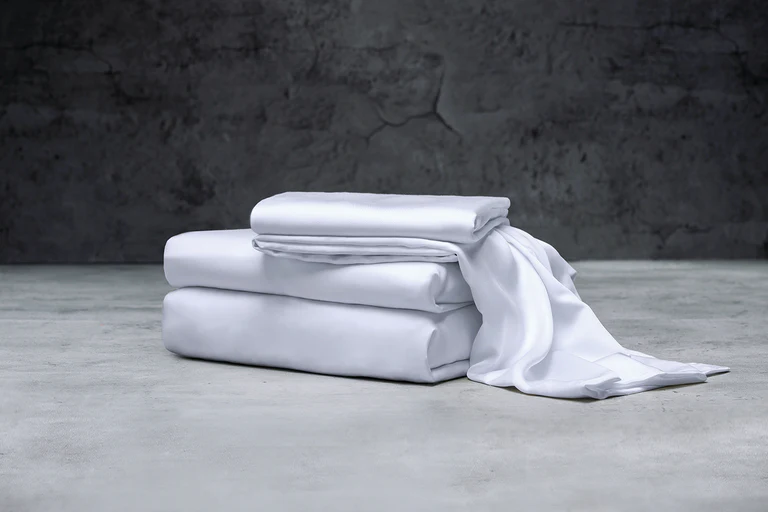
Choyshab matolari yetkazib beruvchilar: Packaging and Logistics That Protect Every Roll
Your fabric passed inspection at the mill. The colour was right, the hand feel was right, and the width and weight matched your specification. Then it arrived at your warehouse creased, damp at the edges, crushed at the roll ends, or mixed up so badly that your cutting team lost a day sorting it out. The problem was not the fabric. The problem was everything that happened after inspection: how the rolls were packed, how they were labelled, how they were loaded into the container, and what paperwork travelled with them. For bedding fabric buyers, packaging and logistics are not an afterthought. They are the last stage of quality control, and they decide whether the fabric you approved is the fabric you can actually cut, tikish, and sell.
This is a common and expensive blind spot. Buyers compare bedding fabric suppliers on yarn, qurilish, bo'yash, and unit price, but they accept packaging as standard without asking what standard means. One supplier’s standard is a tight polybag on a strong core with clear end labels. Another supplier’s standard is loose wrapping, a weak core, and a handwritten mark that rubs off in transit. Both will call it export packing. Only one will survive a long sea voyage, a humid port, and repeated handling without damage. If you import bedding fabric in rolls, you need to judge suppliers on packaging and logistics with the same rigour you apply to the fabric itself.
Why Packaging Decides Fabric Quality on Arrival
Bedding fabric is bulky, heavy, and vulnerable in very specific ways. A roll can look perfect on the outside and be damaged where it matters most: at the outer layers, at the core ends, and along the selvedge. Pressure from stacking can flatten rolls and leave permanent creases that show up after cutting. Moisture can cause staining, mildew, and odour, especially for cotton, zig'ir, bamboo fibre, and Tencel fabrics stored in a warm container. Friction between rolls can abrade the surface and dull a print or a sateen finish. Poor labelling can cause a far simpler failure: the right fabric in the wrong bundle, sent to the wrong cutting table or the wrong customer.
Good packaging is therefore not cosmetic. It protects the commercial value of the roll. A supplier that thinks carefully about roll packing usually thinks carefully about production too, because both require the same discipline: clear specifications, consistent execution, and a check before dispatch. When you evaluate bedding fabric suppliers, ask to see their packing specification in writing before you place a bulk order. If they cannot describe it, you are buying a promise, not a process.
Rulo qadoqlash: The First Line of Defence
Most bedding fabric travels in rolls, and the details of roll packing matter more than most buyers realise. Start with the core. A strong, straight core prevents the roll from collapsing under its own weight and from being crushed when rolls are stacked or strapped together. A weak or bent core makes the fabric hard to unroll evenly, and it increases the risk of creasing near the centre of the roll. Ask what core your supplier uses, whether the core extends slightly beyond the fabric edge for protection, and how roll ends are protected against impact during loading.
Keyingisi, look at the wrapping. Each roll should be individually wrapped to keep out dust, namlik, and handling marks, and the wrapping should be tight enough not to shift in transit but not so tight that it compresses the fabric and leaves pressure marks. For lighter fabrics and printed fabrics, an inner protective layer can prevent surface abrasion. For heavier fabrics such as flannel and quilted bedding fabrics, the wrapping must still allow the roll to be handled without tearing. Agree these details in advance, rather than discovering them when a container is opened.
Roll Length, Og'irligi, and Handling Limits
Roll length and roll weight are logistics decisions, not just production conveniences. Very long, heavy rolls may reduce the number of joints in your cutting plan, but they are harder to lift, harder to load safely, and more likely to be damaged by forklifts or dropped during handling. Very short rolls increase handling, yorliqlash, and waste. The right balance depends on your cutting equipment, your warehouse handling, and your order size. Tell your supplier how your team unrolls and cuts fabric, and agree a maximum roll weight and a consistent roll length for each construction. Consistency matters: when every roll in a shipment follows the same packing pattern, your warehouse can plan storage, picking, and cutting without surprises.
Also agree how pieces are joined, if at all. Some buyers accept joined pieces within a roll, others require continuous length. Whatever you choose, it must be marked clearly and consistently. A hidden joint discovered at the cutting table wastes fabric and time, and it is entirely preventable with clear labelling and a packing rule agreed before production.
Moisture Protection: The Risk You Cannot See Until It Is Too Late
Moisture is the quietest cause of bedding fabric claims. A container can travel through heat, humidity, rain at loading, and condensation during temperature changes at sea. Fabric that left the factory dry can arrive damp, especially at the outer layers and at the ends of rolls nearest the container doors. Cotton and linen absorb moisture readily. Bamboo fibre and Tencel fabrics also need careful protection, because dampness can affect hand feel, appearance, and storage life.
Ask your supplier how moisture protection is built into packing. Good practice starts before packing: fabric should be packed dry, not rushed from finishing while still warm or damp. Individual roll wrapping should be sealed well enough to resist humidity and incidental water exposure. Outer packing should add a further barrier, particularly for sea freight and for destinations with a humid climate or a long inland journey after the port. Desiccants, moisture-barrier bags, and careful container loading can all help, but only if they are specified for your route and your season, not added as an afterthought.
Do not rely on a visual check at the port to catch moisture damage. By the time staining or odour is visible, the claim process has already started. Buning o'rniga, agree the packing method for your shipment, ask for packing photos before the container is sealed, and inspect the first rolls on arrival before you release the whole shipment to production. Photographs of roll ends, outer packing, and container loading are cheap insurance, and a supplier that provides them routinely is showing you how it controls quality after inspection.
Labelling: Small Marks That Prevent Large Mistakes
Labelling sounds minor until a shipment goes wrong. In a warehouse full of similar-looking white, cream, and grey rolls, a clear label is the only thing standing between smooth production and a costly mix-up. Every roll should carry the information your team needs without opening the wrapping: article or style reference, qurilish, colour or shade reference, kengligi, length, and roll or lot number. Carton or bundle labels, where used, should match the roll labels inside, so a picker does not have to open every package to find the right fabric.
Shade and lot control deserve special attention for bedding fabric. Bedding sets, dubet qopqog'ini qoplaydi, and sheet sets are sold as matched sets, so shade variation between rolls can become visible variation between pieces in the same set. Labelling by lot or dye batch helps your cutting team group fabric correctly and helps your supplier trace a problem if one arises. Ask how shade is marked, whether rolls from different lots are packed separately, and how your supplier prevents mixed lots from being shipped as one continuous programme.
Labels must also survive the journey. Paper labels that tear, ink that smudges in humidity, and adhesive that fails in heat are all common failures. Ask whether labels are placed on the roll end, the outer wrapping, yoki ikkalasi ham, and whether the information is also shown on the packing list by roll. Redundancy is useful here: a label on the roll, a matching entry on the packing list, and a photograph of the loaded container together make it far easier to resolve any dispute quickly.
Container Loading: Where Good Packing Is Won or Lost
Even perfect roll packing can be undone by careless container loading. Rolls loaded loosely can shift during transit, rub against each other, and arrive with abrasion and crushed ends. Rolls stacked too high can compress the lower layers. Mixed cargo can transfer dirt, odour, or moisture. A container that is loaded without a plan is a risk, however good the fabric inside it may be.
Ask your supplier to describe its loading method for bedding fabric rolls. Rolls are commonly loaded on their sides or upright depending on roll size, vazn, and container type, and the choice should be consistent and explained. Heavy rolls should not sit on top of light or delicate rolls. Gaps should be filled or braced so the load cannot shift. Strapping and dunnage should protect the load without cutting into wrapping or crushing roll ends. If your order fills only part of a container, ask how the remaining space is secured, because a partly filled container is more likely to shift than a full one.
Photographs and a loading record are again valuable. A short set of photos showing the container before loading, during loading, and after the doors are ready to close gives both sides a shared record. If damage is later found, you can see whether the problem began with packing, loading, or handling after arrival. Suppliers that resist this simple step are asking you to accept risk without evidence.
Zararning oldini olish: Inspection Before Dispatch, Not After Arrival
The best time to prevent a logistics claim is before the container leaves the factory. A final dispatch check should confirm that the rolls packed match the order, that labels match the packing list, that wrapping is intact, and that the container is clean, dry, and free from odour or previous cargo residue. This check is separate from fabric inspection. Fabric inspection asks whether the fabric meets specification. Dispatch inspection asks whether the right fabric, packed the right way, is going into the right container.
Buyers should also agree what happens if damage is found in transit. Who photographs it, how quickly must it be reported, what evidence is needed, and how replacement or credit is handled should be discussed before shipment, not during a dispute. Clear rules reduce friction because both sides know what good evidence looks like. Keep samples from the shipped lot where possible, keep the damaged packing, and do not discard roll labels until the claim is closed. Small habits like these often decide whether a claim is settled in days or drags on for weeks.
For hotel buyers and brands with fixed launch dates, damage prevention has a further dimension: buffer planning. If a shipment is delayed or partly damaged, can the supplier split production, prioritise a partial shipment, or expedite replacement rolls? A supplier with real manufacturing scale has more options than a supplier that must wait for the next available production slot. Nantong Integrity Textile manufactures mid-to-high-end home textiles including sheet sets, duvet and quilt sets, quilted bedding, matolar, mehmonxona choyshablari, adyol, va yostiqlar, on an OEM and ODM basis, so buyers can discuss production, packing, and delivery as one plan rather than three separate promises.
Delivery Documentation: Paperwork That Protects Your Shipment
Delivery documentation is often treated as admin, but for bedding fabric it is part of logistics quality. The packing list should match the physical shipment roll by roll, not just by total quantity. The commercial invoice, packing list, and any certificates should use the same article descriptions, miqdor, and references, so customs clearance and warehouse receiving do not stall on mismatched wording. Where certificates are required, such as OEKO-TEX Standard 100 documentation for the relevant fabric, they should travel with the shipment or be provided in advance in the form your customs broker and your customers accept.
Ask your supplier to confirm the document set before shipment: packing list by roll or carton, invoice, bill of lading details, and any origin or compliance documents your market requires. Confirm who sends what, and when. A packing list sent after the container has sailed is of limited use to a warehouse planning receiving space. A packing list sent before loading, with roll numbers and lot information, lets your team prepare storage, plan cutting, and spot a discrepancy while there is still time to correct it.
Traceability also matters after delivery. If a customer later reports a shade, qisqarish, or quality issue, you need to trace it back to a lot, a shipment, and a production record. Good labelling and good documentation together make that possible. Poor labelling and vague paperwork make it a guess. When you compare suppliers, treat traceability as a quality feature, not a clerical detail.
A Practical Checklist for Choosing a Supplier on Logistics
Use this checklist in your next supplier discussion. The answers will tell you quickly whether packaging and logistics are managed or improvised.
- Packing specification in writing: core, wrapping, roll-end protection, maximum roll weight, and consistent roll length for each construction.
- Moisture protection by route: packing and protection matched to sea freight, climate, and inland transport, not one generic method for every destination.
- Labelling by roll: article, qurilish, colour, kengligi, length, and lot number on every roll, matching the packing list.
- Container loading plan: loading method, stacking limits, bracing, and photographs before the container is sealed.
- Dispatch check: a final check that the packed shipment matches the order before it leaves the factory.
- Documents before arrival: packing list, invoice, and required certificates sent in time for customs clearance and warehouse planning.
- Claims process agreed in advance: evidence required, reporting time, and how replacement or credit is handled.
Suppliers that answer these points clearly are easier to work with over time, because logistics problems become joint problems with a shared record, rather than arguments about memory. Suppliers that cannot answer them may still make good fabric, but they are asking you to carry the delivery risk for them.
Tez-tez so'raladigan savollar
What is the safest way to pack bedding fabric rolls for sea freight?
There is no single safest method for every fabric and route, but the principles are consistent: a strong core, individual wrapping to resist dust and moisture, protected roll ends, consistent roll length and weight, and a container loading plan that prevents shifting and crushing. For humid routes or long voyages, add stronger moisture protection and confirm that fabric is packed dry. Ask your supplier to specify the method for your shipment in writing, rather than accepting a general promise of export packing.
How should bedding fabric rolls be labelled to avoid cutting mistakes?
Each roll should show article or style reference, qurilish, colour or shade reference, kengligi, length, and lot number, and that information should match the packing list. Pack rolls from the same lot together where shade matching matters, such as sheet sets and duvet cover sets, and mark any joined pieces clearly. Labels should be durable enough to survive humidity and handling, and the same information should appear on the roll and on the packing list.
How can I reduce moisture damage in bedding fabric shipments?
Start with dry fabric and sealed individual wrapping, add outer protection suited to your route, and make sure the container is clean and dry before loading. Ask for loading photographs, check the first rolls on arrival before releasing the full shipment, and store fabric away from damp floors and exterior walls. If you import regularly to a humid market, agree a seasonal packing method with your supplier rather than using the same method all year.
What should I check when a bedding fabric container arrives?
Check the container seal and condition, then check roll labels against the packing list before opening every roll. Inspect roll ends and outer wrapping for crushing, tearing, dampness, or staining, and photograph anything unusual before you move or cut the fabric. Keep labels and damaged packing until any claim is resolved, and report damage promptly with photographs and roll numbers so the supplier can trace the lot.
Should I choose a bedding fabric supplier mainly on packaging and logistics?
Yo'q, but you should not ignore them either. Fabric quality, dyeing consistency, sig'im, and commercial terms still come first. Packaging and logistics should be a deciding factor among suppliers that are otherwise comparable, and a warning sign if a supplier cannot describe its packing, yorliqlash, loading, and documentation process. INTEGRITY TEXTILE is based in Tongzhou, Nantong, Jiangsu, was founded in 2007, and operates about 30,000 square metres with around 143 staff, holding ISO9001, ISO14001, ISO45001, va OEKO-TEX standarti 100 sertifikatlar, which gives buyers a stable base from which to agree detailed packing and delivery requirements.
Can packaging be customised for my warehouse and cutting process?
Ha, in most cases, and it should be discussed before bulk production. Roll length, maximum roll weight, labelling format, lot grouping, and carton or bundle arrangements can often be adapted to your cutting equipment and warehouse handling. The key is to agree the custom packing specification in writing, confirm it on the first shipment, and keep it consistent for reorders. A change in packing without notice can disrupt cutting plans just as surely as a change in fabric specification.
Choose a Supplier That Protects the Fabric After Inspection
The fabric you approve in a sample or an inspection report is only valuable if it arrives in usable condition. That final step depends on roll packing, moisture protection, yorliqlash, konteyner yuklash, dispatch checks, and delivery documentation. Judge bedding fabric suppliers on all of it, not just on the fabric and the price. Ask for the packing specification, the loading photographs, and the packing list by roll, and choose the supplier whose answers are specific, izchil, and easy to verify.
If you are comparing suppliers for cotton, zig'ir, bamboo fibre, Tencet, or flannel bedding fabrics, varaqlar to'plamlari, yorgan to'plamlari, quilted bedding, or hotel linen, talk to bizning fabrikamiz about your packing and delivery requirements as part of your enquiry, not as an afterthought. Our commercial approach is simple and transparent: under our Respect target price model, you name a target price and we answer yes or no, so packing, logistika, and price can be discussed honestly from the start. Monthly capacity is about 40,000 bedding sets and about 25,000 yorgan to'plamlari, on an OEM and ODM basis.
Send your fabric specification, your target packing requirements, and your delivery destination, and we will discuss a packing and logistics plan that fits your warehouse and your market. Elektron pochta Alex@integritytex.com, G'altak +86 151 5289 1159, yoki Biz bilan bog'lanish through our website. Choose a supplier that treats the journey as carefully as the fabric itself, and your next shipment should arrive ready to cut, not ready to claim.