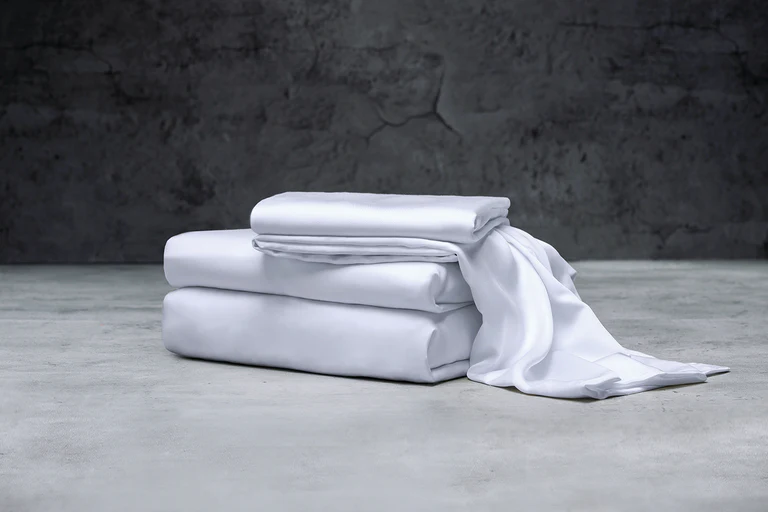
A buyer ordered “100% bambus” sheet sets at a premium price. The lab report came back: 100% polyester microfiber with a bamboo marketing story. The retailer’s private-label contract specified bamboo. The shipment was unsellable under that label, the season was lost, and the legal exposure was real. This was not a back-alley deal — it came from a mid-sized supplier with a nice website. Among produsenter av sengetøy, fiber mislabeling is the quietest and most expensive fraud in the industry, because the lie is invisible until a lab, a regulator, or an angry customer finds it.
Bomull, Tencel™ lyocell, and bamboo are the three fibers where bedding buyers get deceived most often — each for different reasons. Cotton gets diluted with cheaper blends. “Tencel” gets applied to generic lyocell that has no Lenzing relationship. “Bambus” gets stretched across three chemically distinct fibers, only one of which resembles what the buyer imagined. This guide teaches you how to authenticate all three: the field tests you can run yourself, the lab tests worth paying for, and the contract language that makes mislabeling the supplier’s problem, not yours.
Why Fiber Fraud Concentrates in Bedding
Three structural reasons. Først, the price gaps are large: genuine long-staple cotton costs multiples of short-staple; certified Tencel™ lyocell commands a premium over generic lyocell; real bamboo lyocell costs more than bamboo-viscose processed the cheap way. Every gap is an arbitrage opportunity for a dishonest supplier. Sekund, the finished product hides the fiber — once woven, dyed, and finished, cotton/polyester blends and bamboo/viscose swaps are invisible to the eye and hand. Tredje, buyers rarely test. Fewer than one in ten small and mid-sized importers ever commissions a fiber-content lab test, and suppliers know it. Authentication is not paranoia; it is the rational response to an industry where testing is rare and the payoff for cheating is high.
Authenticating Cotton: Bortenfor “100% Bomull” on the Label
The blend trick
The most common cotton fraud is not fake cotton — it is diluted cotton. A sheet labeled 100% cotton that is actually 60/40 cotton/polyester feels fine in the sample room, passes a casual hand test, and only reveals itself in the lab or after twenty washes, when pilling and static give it away. Polyester is cheaper, and at 40% content the cost saving is substantial while the deception survives everything short of a burn test or lab analysis.
Field tests that actually work
- The burn test. Pull a few yarns from an inconspicuous seam and burn them. Pure cotton burns steadily with an afterglow, smells like burning paper, and leaves a soft gray ash that crumbles. Polyester melts, smells sweetly chemical, and leaves a hard black bead. A cotton/poly blend does both — you will see melting alongside the ash. It is crude, but it catches the 60/40 trick in sixty seconds.
- The wrinkle test. Crush a corner of the fabric in your fist for ten seconds. Pure cotton wrinkles sharply and holds the crease; polyester blends spring back. High-quality long-staple cotton still wrinkles — wrinkle resistance in “bomull” sheets usually means a finish or a blend, not better cotton.
- The water test. Drop water on the fabric. Pure cotton absorbs quickly and evenly; polyester-heavy blends bead or absorb slowly. Useful as a quick check, not a verdict.
The thread-count trap
Thread count is the most abused number in bedding. Inflated counts come from counting plied yarns multiple times — a 2-ply 300-thread fabric marketed as “600 antall tråder” — or from inserting filler picks that add nothing to feel or durability. When a produsent av sengetøy quotes thread count, ask whether it is single-ply equivalent and how it is measured. Honest suppliers answer plainly; the inflated-count game is a reliable marker of a supplier comfortable with deception elsewhere too.
What to demand
A fiber-content lab report from an accredited lab (SGS, Intertek, BV, TÜV) on the bulk fabric before cutting — not on the salesman sample. Specify the test standard in your PO (f.eks., AATCC 20/20A for fiber analysis) and make bulk production conditional on the report matching the label claim within tolerance.
Authenticating Tencel: The Lenzing Line That Matters
Here the fraud has a specific shape. “Tencel” is a Lenzing trademark for its lyocell (and modal) fibre. Generic lyocell from other producers is a real fiber with real properties — but it is not Tencel™, and it does not command the Tencel™ premium or carry the brand equity your marketing may rely on. Suppliers routinely label generic lyocell bedding as “Tencel” because buyers pay more for the word.
How to verify
- Ask for the Lenzing supply-chain documentation. Genuine Tencel™ flows through a licensed chain: fiber producer to yarn spinner to weaver, with documentation at each step. A legitimate supplier can show you the chain back to Lenzing fiber purchase. “Our fabric supplier says it’s Tencel” is not a chain.
- Check hang-tag and labeling rights. Using the Tencel™ trademark on hang tags and packaging requires Lenzing’s brand licensing. Ask whether the supplier holds it. Unauthorized trademark use is both a fraud signal and your legal liability if you repeat the claim at retail.
- Lab identification. Fiber-content analysis distinguishes lyocell from the blend tricks sometimes used alongside it (lyocell/polyester mixes sold as pure lyocell). It cannot distinguish Lenzing lyocell from generic lyocell chemically — that is what the paper chain is for. Use both: the lab for composition, the documents for provenance.
The feel myth
Buyers often believe they can “føle” real Tencel. You cannot, reliably — finishing treatments can make polyester feel silky and make genuine lyocell feel ordinary. Touch is a quality signal, not an authentication method. Every authentication that matters is either documentary or laboratory.
Authenticating Bamboo: Three Fibers, One Word
“Bambus” on a bedding label can mean three chemically different things, and the difference matters for price, performance claims, og overholdelse av forskrifter:
- Bamboo viscose (rayon). Bamboo pulp processed with the conventional viscose method — chemically intensive, and the end fiber is chemically rayon regardless of the bamboo origin. This is most of what is sold as “bambus” bedding. In several markets, labeling it simply “bambus” without “viscose/rayon” qualification has drawn regulatory action.
- Bambus lyocell. Bamboo pulp processed with the closed-loop lyocell method — cleaner process, and the fiber genuinely differs from viscose in production chemistry. Costs more, and worth specifying if you are paying for it.
- Mechanical bamboo fiber. Genuinely processed like linen — rare in bedding at scale, dyr, and almost never what a mass supplier means by “bamboo.”
How to pin it down
Demand the specific fiber name in writing: “bambus viskose,” “bambus lyocell,” or mechanical — never just “bamboo.” Then lab-test the composition, because bamboo viscose is routinely cut with polyester or conventional viscose. And check your market’s labeling rules before you print a single hang tag: what you may legally call the product varies, and the supplier’s label wording is not legal advice. When a supplier cannot tell you which of the three fibers they are selling, you have your answer about the supplier.
The Lab Tests Worth Paying For
For a serious program, budget a few hundred dollars in testing per fabric — trivial against a container’s value:
- Fiber content analysis (AATCC 20/20A or equivalent) — the single most important test. Confirms the label claim quantitatively.
- OEKO-TEX® Standard 100 product certification — tests for harmful substances, not fiber identity, but a supplier whose fabrics carry it is operating inside a verifiable system. INTEGRITET TEKSTIL‘s products carry OEKO-TEX Standard 100 sertifisering, and the certificate numbers are independently checkable — that checkability is the point.
- Performance tests that corroborate identity — pilling resistance, dimensjonsstabilitet, og fargeekthet. EN “pure cotton” sheet that pills like polyester is telling you something even before the fiber report arrives.
Test the bulk fabric, not just the salesman sample. The classic bait-and-switch is a genuine sample followed by diluted bulk. Write lab approval of bulk fabric into the PO as a hold point before cutting.
Contract Language That Protects You
Authentication without contractual teeth is advice, not protection. Put this in writing:
- Exact fiber composition with tolerances (f.eks., “100% bomull, ±3%”), naming the specific fiber for bamboo and the trademark status for Tencel™.
- The lab, the standard, and who pays — typically supplier pays for the pre-bulk test, buyer for spot checks.
- A hold point: no bulk cutting until the fiber report is approved.
- Remedies for mislabeling: rejection rights, rework-or-replace at supplier cost, and liability for relabeling and regulatory exposure. Suppliers who intend to deliver what they promise sign this without drama.
Ofte stilte spørsmål
Can I authenticate fabric without a lab test?
Partially. Burn tests, wrinkle tests, and water absorption catch crude fraud like polyester dilution quickly and cheaply. But they cannot quantify a 90/10 versus 100/0 composition, identify which bamboo process was used, or verify Tencel™ provenance. Field tests are screening; the lab is the verdict.
How much does fiber-content testing cost?
Typically a few hundred US dollars per fabric at an accredited lab, with results in 5–10 working days. Against a 5,000-set order, it is the cheapest insurance in the program. Test every distinct fabric in the order, not just one representative swatch.
Is generic lyocell bad quality compared to Tencel™?
Not necessarily — generic lyocell can be a fine fiber. The issue is not quality but honesty and price: if you pay the Tencel™ premium and receive generic lyocell, you have overpaid, and if your marketing claims Tencel™ without a Lenzing chain, you carry trademark risk. Buy generic lyocell knowingly at generic prices, or buy Tencel™ with documentation.
What is the most commonly faked “bambus” produkt?
Bamboo-viscose sheets cut with polyester, sold at pure-bamboo prices. The polyester adds wrinkle resistance that buyers mistake for quality while the supplier pockets the fiber-cost difference. A fiber-content report is the only reliable check.
Should I trust a supplier’s own lab report?
As a starting point, never as the final word. Supplier-provided reports may be genuine but test the sample the supplier chose to send. Commission your own test on fabric you sampled from bulk — or at minimum from a production roll selected by your inspector, not the sales office.
Does OEKO-TEX certification prove fiber content?
No — OEKO-TEX Standard 100 certifies the absence of harmful substances, not what the fiber is. It is a safety credential, and a valuable one, but fiber identity needs a separate fiber-analysis report. Alvorlig produsenter av sengetøy hold both kinds of documentation and can explain which is which.
Fiber fraud survives on buyer trust and buyer negligence in equal measure. Remove the negligence — field-screen every fabric, lab-test the bulk, pin the exact fiber name into the contract, and verify certifications by number rather than by PDF. Do that, and the economics of cheating collapse: honest suppliers welcome the testing because it is also their shield against competitors who cut corners. Send your fabric specifications to Nantong integritetstekstil — ask for the fiber-content documentation, the OEKO-TEX certificate numbers, and the Lenzing chain paperwork where applicable, and see how a verifiable supplier answers. Reach us at Alex@integritytex.com or WhatsApp +86 151 5289 1159, og kontakt oss before your next program’s fabric decision.