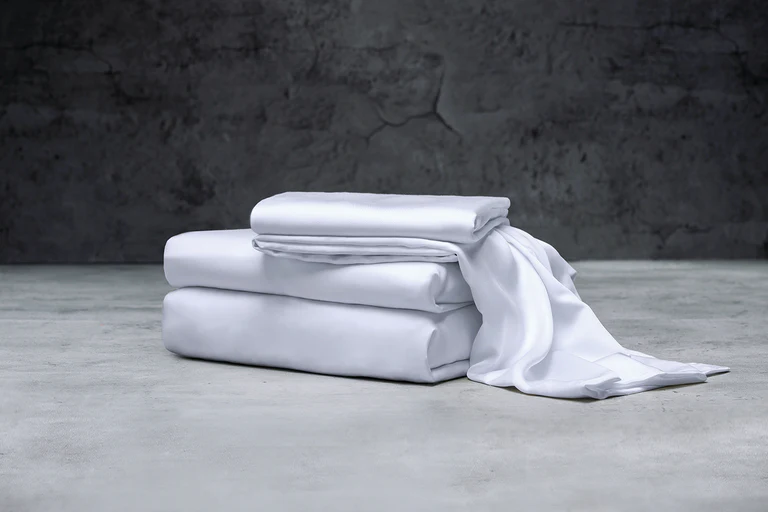
The Real Cost of Choosing the Wrong Hospital Linen Supplier
A procurement manager at a 300-bed hospital once told us a story that still comes up in our factory meetings. Her team had secured what looked like an excellent deal on bed sheets: the unit price was 18 percent below their previous contract, the sample felt soft and heavy, and the supplier answered emails quickly. Six months later, the sheets began to tell a different story. After repeated industrial laundering, the fabric thinned at the fold lines, seams started to open, and the white had drifted toward a tired gray. Nurses complained. The laundry contractor blamed the fabric. The supplier blamed the laundry. By the end of the year, the hospital had replaced the entire lot early, paid for two emergency top-up orders at rush pricing, and spent months managing internal complaints. The “cheap” deal cost them far more than the premium quote they had rejected.
This story is not unusual. When hospitals and healthcare distributors source bed sheets, pillowcases, draw sheets, and blankets, the purchase decision often happens far from the laundry room where the product actually lives or dies. Hospital linens are not ordinary textiles. They are washed at high temperatures, exposed to aggressive detergents and disinfectants, dried and ironed on industrial equipment, and expected to look presentable for dozens of cycles. A supplier that looks perfect on paper can fail completely in this environment. The purpose of this article is to give buyers a practical pitfalls checklist: the nine mistakes we see buyers make most often when choosing hospital linen suppliers, and exactly how to avoid each one.
At Nantong Integrity Textile, we have manufactured bedding and institutional textiles since 2007, and we have watched these mistakes repeat across markets. This checklist comes from that experience, not from theory.
Pitfall 1: Judging the Supplier by Sample Quality Alone
Samples lie. Not always deliberately, but often enough that experienced buyers treat them as a starting point rather than evidence. A supplier can cut a beautiful sample from a premium greige lot, sew it carefully by hand, and ship it with perfect pressing. The bulk order, produced weeks later on a different production line, may use a different cotton lot, a looser weave, or faster stitching. This phenomenon has a name in the industry: bulk drift.
How to avoid it: insist that the sample and the bulk production share the same written specification, and put that specification into the contract. Specify yarn count, thread count, fabric weight in GSM, weave type, and finished dimensions. Then, when the bulk goods arrive, test them against the sample rather than admiring them separately. Better still, ask the supplier how they control consistency between sample and bulk: do they keep a sealed reference sample? Do they run in-process inspections? A supplier that welcomes these questions is one worth keeping. At our factory, every production lot is checked against the sealed customer-approved sample before shipment, and buyers are encouraged to send third-party inspectors at any stage.
Pitfall 2: Ignoring Industrial Laundry Survivability
This is the single most expensive mistake on the list. Hospital linens are laundered under conditions that would destroy consumer bedding: wash temperatures that can exceed 70 degrees Celsius, strong alkaline detergents, chlorine-based disinfection, and high-speed extraction followed by calender ironing. A fabric that feels luxurious in the sample room can lose strength dramatically after thirty or forty such cycles.
Buyers often evaluate linens the way they evaluate hotel bedding, by hand feel and appearance. For hospital use, the right questions are different: What is the shrinkage rate after five industrial washes? What is the tensile strength retention after fifty cycles? Is the colorfastness rated for chlorine bleach? A credible hospital linen supplier should be able to discuss wash durability in concrete terms and, ideally, provide test reports from accredited laboratories.
How to avoid it: write laundry performance into your specification. Ask for shrinkage below an agreed threshold after repeated washing, and for pilling and seam strength data. If your institution uses an outside laundry contractor, bring them into the specification discussion before you buy, not after the first complaint. The laundry knows exactly what kills fabric, and their input will save you from choosing a beautiful sheet that dies in six months.
Pitfall 3: Accepting Vague Fabric Specifications
“100% cotton, high quality” is not a specification. It is a wish. Yet many purchase orders for hospital linens contain little more than fiber content and a color. Without numbers, you cannot compare quotes, you cannot hold a supplier accountable, and you cannot know what you are actually buying. Two sheets both labeled “100% cotton white” can differ enormously in yarn count, weave density, fabric weight, and finishing, and those differences decide both price and lifespan.
How to avoid it: demand a complete technical specification for every item. At minimum, this should include fiber composition, yarn count, thread count or fabric density, weight in grams per square meter, weave structure (plain, twill, or sateen), finished size with tolerances, color with an agreed standard, and shrinkage limits. A professional hospital linen supplier will provide this sheet without hesitation and will reference it in the sales contract. If a supplier resists putting numbers on paper, treat that resistance as information.
Pitfall 4: Taking Certifications at Face Value
Certificates are easy to display and hard to verify, which makes them a favorite shortcut for buyers under time pressure. A supplier’s website may show ISO9001, ISO14001, or OEKO-TEX Standard 100 logos, but logos on a website prove nothing. Certificates expire. They may cover only part of a company’s operations. In some cases they belong to a different company entirely.
How to avoid it: ask for the certificate number and the issuing body, then verify it. OEKO-TEX certificates, for example, can be checked through the official OEKO-TEX label check system using the certificate number. ISO certificates can be verified with the certification body. Also check the scope: an ISO9001 certificate for a trading office does not certify a factory’s production lines. INTEGRITY TEXTILE holds ISO9001, ISO14001, ISO45001, and OEKO-TEX Standard 100 certifications covering our manufacturing operations, and we provide certificate numbers to buyers for independent verification. Any supplier unwilling to do the same should raise a flag.
Pitfall 5: Skipping Shrinkage and Colorfastness Testing
White is the standard color for hospital bed linens, which tempts buyers to skip color testing entirely. That is a mistake. Even white fabrics can yellow, gray, or develop uneven tones after industrial laundering, and many hospitals also purchase colored items such as patient gowns, staff uniforms, or draw sheets in blue or green. Shrinkage is equally neglected: a fitted sheet that shrinks three percent may no longer fit the mattress, and a flat sheet that shrinks unevenly will not stay tucked.
How to avoid it: build testing into your buying process. Before placing a bulk order, send the sample to a laboratory for a basic panel: dimensional stability after washing, colorfastness to washing and to chlorine bleach where relevant, and pilling resistance. The cost of this testing is trivial compared with the cost of a failed bulk lot. Also agree with the supplier in advance on what happens if goods fail testing after delivery. A serious supplier will accept a clear, fair quality agreement with defined remedies.
Pitfall 6: Overlooking Packaging and Logistics
Buyers focus on the product and forget the journey. Hospital linens travel thousands of kilometers, often by sea, through humid ports and multiple handling stages. Poor packaging turns good products into damaged ones: compressed bales that crease permanently, missing moisture protection that invites mildew, or cartons that collapse in stacked containers. We have seen buyers reject goods at the port for problems that had nothing to do with manufacturing quality.
How to avoid it: specify packaging in the contract, not just the product. Define the inner packaging (individual polybag per piece or per set), the export carton specifications, moisture protection requirements, and labeling for easy warehouse handling. Ask the supplier about their standard export packing and whether they have experience shipping to your region. A supplier that regularly exports institutional textiles will already have packaging standards designed for long sea freight, and will be able to show you photos of actual shipments.
Pitfall 7: Choosing on Unit Price Alone
Price matters, but unit price without context is one of the most misleading numbers in procurement. A sheet that costs 15 percent less but lasts half as long is not cheaper; it is twice as expensive. Beyond lifespan, the true comparison includes defect rates, claim handling speed, communication quality, and the supplier’s willingness to stand behind the goods. Buyers who award contracts purely on the lowest bid often discover these costs later, when there is no leverage left.
How to avoid it: evaluate total cost of ownership, not unit price. Estimate cost per wash cycle rather than cost per piece: divide the unit price by the expected number of laundry cycles before replacement. Compare suppliers on specification-matched quotes, never on headline prices for vaguely described goods. And consider the supplier’s pricing philosophy. Our factory practices what we call “Respect target price”: the buyer names a fair target price, and we answer honestly whether we can make it or not, instead of entering rounds of negotiation games. This one-price approach saves both sides time and keeps the focus on whether the specification and the price genuinely match. If you want to discuss your target openly, contact us and we will give you a straight answer.
Pitfall 8: Never Auditing the Factory
Many buyers select hospital linen suppliers entirely through email and video calls, never verifying what exists behind the website. Trading companies can present themselves convincingly as manufacturers. Even genuine factories vary enormously in equipment, housekeeping, and quality systems. Without an audit, you are buying a story.
How to avoid it: audit before you commit to volume. An on-site visit is ideal: walk the cutting, sewing, and packing floors, check the laboratory, look at how greige fabric is stored, and ask to see production records. If travel is impractical, commission a third-party audit or at minimum request a live video walkthrough of the actual production areas, not a showroom. Key things to observe: whether the factory has in-house testing equipment, how it handles non-conforming goods, and whether workers follow documented procedures. Nantong Integrity Textile operates approximately 30,000 square meters of production space with around 143 employees and monthly capacity of about 40,000 bedding sets and 25,000 duvet sets, and we welcome buyer audits and video inspections at any time. A factory that resists scrutiny is telling you something.
Pitfall 9: Ignoring Capacity and Lead Time Reality
The final pitfall is timing. Hospitals often tender on fixed schedules, and a supplier that promises an attractive delivery date without the capacity to keep it creates a crisis. Overpromising is common when factories are hungry for orders: they accept your deadline, then quietly push your production behind a larger customer’s, and you learn about the delay two weeks before your stock runs out.
How to avoid it: ask direct questions about current capacity utilization and production scheduling. A trustworthy supplier will tell you honestly when their lines are full and propose a realistic schedule, or suggest splitting delivery into batches so your urgent needs are covered first. Put delivery milestones in the contract with defined consequences for delay. And maintain a qualified backup supplier. Single-sourcing hospital linens is efficient until it is catastrophic; the checklist approach to supplier selection makes it far easier to qualify a second source without starting from zero.
How to Use This Checklist in Your Next Tender
Checklists only work if they are used before the decision, not after the failure. We recommend turning these nine pitfalls into a scoring sheet for your next hospital linen tender. Assign each pitfall a pass-or-fail criterion, evaluate every bidding supplier against it, and disqualify any supplier that fails on the non-negotiables: specification clarity, certification verifiability, laundry performance evidence, and audit access. Price should be scored only among suppliers that pass every gate. This method takes slightly more effort up front and saves enormously later, because it filters out exactly the suppliers that generate the horror stories.
Share the checklist with your internal stakeholders too. The laundry contractor, the nursing staff who handle the linens daily, and the finance team that sees the replacement costs all have perspectives that belong in the specification. A tender built only by the purchasing department tends to optimize for purchase price; a tender built with the users optimizes for value.
Frequently Asked Questions
What is the most common mistake buyers make with hospital linen suppliers?
In our experience, it is evaluating linens like consumer bedding instead of like industrial consumables. Buyers focus on hand feel and appearance, while the product’s real test is surviving dozens of high-temperature industrial wash cycles. Always specify and verify laundry durability, shrinkage, and seam strength before comparing prices.
How can I verify a hospital linen supplier’s certifications?
Ask for the certificate number and issuing body for each claimed certification, then verify independently. OEKO-TEX Standard 100 certificates can be checked through the official OEKO-TEX label verification system, and ISO certificates can be confirmed with the issuing certification body. Also confirm the certificate covers the actual manufacturing site, not just a sales office.
Should I choose the lowest-priced hospital linen supplier?
Only after all bidders pass the same quality gates. Compare cost per laundry cycle rather than cost per piece: a cheaper sheet that must be replaced twice as often is the more expensive option. Evaluate total cost of ownership, including defect rates, claim handling, and delivery reliability.
What specifications must a hospital bed sheet quotation include?
Fiber composition, yarn count, thread count or fabric density, weight in GSM, weave structure, finished dimensions with tolerances, color standard, shrinkage limits, and packaging details. If a quotation lacks these numbers, you cannot fairly compare it with others or hold the supplier accountable later.
Is a factory audit really necessary before ordering hospital linens?
For any significant volume, yes. An audit, whether on-site or through a qualified third party, confirms that the manufacturing capability behind the quotation actually exists. It also reveals the factory’s quality systems, testing equipment, and housekeeping standards, which are strong predictors of consistent bulk quality.
How do I protect my hospital from delivery delays?
Ask suppliers about current capacity utilization before accepting a delivery promise, put milestones and delay remedies in the contract, and qualify a backup supplier using the same checklist. Splitting urgent orders into batches, with the first batch covering immediate needs, further reduces the risk of stock-outs.
Work With a Supplier That Welcomes the Checklist
The best hospital linen suppliers are not afraid of demanding buyers. They publish specifications, share certificate numbers, invite audits, and answer direct questions about capacity with direct answers. That is the standard we hold ourselves to at INTEGRITY TEXTILE. Founded in 2007 in Tongzhou District, Nantong, we manufacture bedding sets, quilted bedding, bed sheets, pillows, and hotel and institutional linens for buyers worldwide, with OEM and ODM services available.
If you are preparing a tender or simply want a second opinion on a quotation you have received, we are happy to help you apply this checklist. Email us at Alex@integritytex.com, reach us on WhatsApp at +86 151 5289 1159, or visit our factory website to start the conversation. Tell us your target price and your specification, and we will tell you honestly whether we can make it. That is our “Respect target price” promise, and it is how we prefer to begin every partnership.