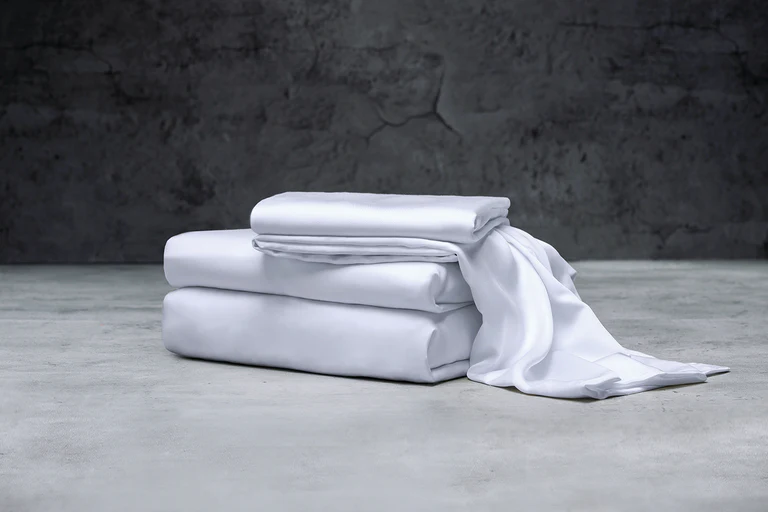
You have received three quotations for hotel bedding, and they differ so much that they cannot all describe the same product. One is far cheaper, one is far more expensive, and one sits in the middle with a list of options you do not fully understand. Which one should you trust? The answer is rarely the lowest price, because hotel bedding quotations are built from many small decisions, and a quotation that omits several of them will always look cheaper than one that includes them. Understanding how hotel bedding manufacturers build their prices lets you compare quotations honestly, negotiate on the right points, and avoid paying later for what was left out at the start.
This article explains pricing logic for hotel bedding in plain terms: what goes into a quote, why similar-looking products cost different amounts, which questions reveal hidden differences, and how to judge value rather than price alone. It is written for hotel owners, procurement managers, hospitality groups, and distributors who buy bedding for properties where durability, appearance, and guest comfort all matter at once.
På INTEGRITET TEKSTIL, we quote hotel bedding every week, and we would rather explain our pricing than win an order on a misunderstanding. Nantong Integrity Textile was founded on 4 March 2007 i Tongzhou-distriktet, Nantong, Jiangsu, and manufactures mid-to-high-end home textiles including hotel linen, ark sett, sett med dyne og dynetrekk, vattert sengetøy, stoffer, tepper, og puter. Hotel bedding is a core part of that range, so the logic below reflects real production, not theory.
Start With the Product, Because Price Follows Specification
Every hotel bedding price begins with a specification, and every difference in specification changes the price. Fibre is the first decision: long-staple cotton, cotton blends, linblandinger, and Tencel each carry different raw-material costs, different dyeing behaviour, and different lifespans under commercial laundering. Weave is the second: percale feels crisp and cool, sateen feels smooth and lustrous, and twill offers a different durability profile. Thread count, garnantall, and fabric weight interact with both, and none of them alone describes quality or cost.
Construction adds further cost layers. A duvet cover with a zip, hidden buttons, ties, or a flap costs more to make than a simple envelope closure, but it may last longer and look better after fifty washes. A fitted sheet with a deep pocket, full elastic, or reinforced corners costs more than a shallow flat sheet, but it stays in place on a thick hotel mattress. Hem width, stingtetthet, rør, broderi, and dobby or jacquard borders all add sewing time and material. A quotation that does not list these details is not necessarily cheaper. It may simply be quoting a simpler product.
The practical step is to demand a specification with every quotation. Ask for fibre, veve, antall tråder, stoffvekt, størrelser, construction details, og fullfør, in writing. Only then can you compare prices, because only then are you comparing products. If two quotations describe different specifications, the price difference is information, not a mystery.
Raw Materials: The Largest and Least Stable Cost
For most hotel bedding, fabric is the largest single cost, and it is also the least stable. Cotton prices move with harvests, markets, and currency, and a quotation is usually valid for a limited period precisely because the fabric price behind it can change. A manufacturer that holds fabric in stock can offer firmer pricing for a shorter window. A manufacturer that must buy fabric for your order must price in the market at the time of purchase, and a quotation that ignores that reality will either expire quickly or be revised later.
Dyeing and finishing add cost on top of the base fabric. White hotel bedding, the industry standard, still requires bleaching, etterbehandling, and whiteness control, and coloured or striped programmes require dye matching and correction rounds. A deep or unusual colour costs more to match consistently than a standard white, and that cost belongs in the quotation, not as a surprise after sampling. If your programme uses colour, ask how colour matching is charged and how many correction rounds are included.
Trims and accessories are small individually and significant together. Zips, buttons, etiketter, threads, and packaging all carry costs, and hotel programmes often need woven labels, pleieetiketter, and barcodes that retail products do not. Ask whether trims are included in the unit price or charged separately, and ask whether packaging is a polybag, a set pack, or a printed retail pack, because each option changes both price and freight.
Production Cost: Labour, Kapasitet, and Order Size
Kutting, sying, etterbehandling, pressing, and inspection all consume labour and machine time, and that time depends on complexity. A plain white flat sheet is fast to produce. A quilted bedspread with a border, a duvet cover with piping and a zip, or a pillowcase with embroidery takes longer, and the price should reflect that honestly. Manufacturers with established lines and trained workers can produce complex items efficiently, but complexity always costs something, and a quotation that prices a complex item like a simple one should raise a question, not delight.
Order size changes unit cost in a predictable way. Larger orders spread fixed costs, such as sampling, pattern making, dye matching, and machine set-up, across more pieces, so the unit price falls. Smaller orders carry those fixed costs on fewer pieces, so the unit price rises. This is why a trial order of a few hundred pieces costs more per piece than a programme order of several thousand, and why comparing a trial price with a programme price misleads. Ask every supplier to quote at the same quantities, and ask how the price changes if your quantity moves up or down.
Capacity also affects price indirectly. A factory with about 30,000 square metres of production space and around 143 ansatte, slik som Nantong integritetstekstil, plans monthly output of roughly 40,000 sheet sets and 25,000 sett med dynetrekk. A programme booked into that plan can be produced efficiently. A programme demanded at peak season, or in a rush, may require overtime or rescheduling, and those costs may appear in the price or in the lead time. Discuss timing alongside price, because the two are connected.
Kvalitet, Undersøkelse, and the Cost of Getting It Wrong
Quality cost is the part of pricing that buyers most often misunderstand, because it is partly invisible. A manufacturer that inspects during production and again before packing spends time and labour that a manufacturer skipping inspection does not spend. A manufacturer that holds OEKO-TEX Standard 100 sertifisering, and operates under ISO9001, ISO14001, og ISO45001, as fabrikken vår does, carries audit, testing, and management costs that an uncertified workshop does not. Those costs make the unit price higher, and they make the delivered product more consistent, safer, and easier to defend to your own customers.
Consider the cost of getting it wrong. Hotel bedding that shrinks, fades, tears at the seam, or pills after twenty washes must be replaced, and replacement costs far more than the original saving. It also costs housekeeping time, guest complaints, and brand damage that never appears on a quotation. A slightly higher unit price that delivers twice the wash life is not more expensive. It is cheaper, measured over the life of the product. Ask suppliers about wash testing, shrinkage expectations, and seam strength, and ask what evidence supports those claims.
Inspection terms belong in the quotation conversation. Ask who inspects, against which approved sample, and what happens to goods that fail. A supplier that welcomes inspection is showing confidence in its process. A supplier that resists it is telling you something too, and that information is worth more than a small price difference.
Freight, Vilkår, and the Price You Actually Pay
A hotel bedding quotation is incomplete until the trade term is clear. An ex-works price excludes freight, forsikring, and import costs. A free-on-board price includes delivery to the port but not sea freight. A delivered price includes far more, but the definition of “delivered” varies. Two quotations on different terms cannot be compared, and the lower number may simply be the one that includes less. Always state the term you want quoted, and ask every supplier to quote on that same term.
Freight for bedding is volume-sensitive, because sheets, dyner, and pillows are bulky relative to their weight. Packing method changes freight cost significantly: vacuum packing reduces volume, but it may not suit every product, and it adds a packing step. Carton size, stykker per kartong, and container loading all affect the landed cost per piece. Ask your supplier to state the packing method and carton details with the quotation, so your freight forwarder can price accurately.
Payment terms and quotation validity also affect real cost. A quotation valid for a short period reflects fabric market movement, not pressure tactics. A supplier offering long validity without a fabric stock explanation may revise the price later. Ask how long the quotation holds, what would trigger a revision, and whether a deposit secures the fabric price. Clear answers here prevent the most common pricing dispute in hotel bedding: a price that changed between quotation and order.
How to Compare Quotations and Negotiate Fairly
Compare quotations in a table, with one row per specification item and one column per supplier. Where a supplier has omitted an item, ask for it before judging the price. Where prices differ, ask why, item by item. Often the difference is a fabric weight, a construction detail, or an inspection step, and once it is visible, the decision becomes easy. Sometimes the difference is genuinely a more efficient factory, and that is useful information too.
Negotiate on the points that matter to you, not only on the headline price. If your programme values wash durability, negotiate fabric weight and stitching, not a discount that quietly reduces them. If your programme values appearance, negotiate colour matching and finishing. If you can commit to larger or repeat volumes, si det, because that is the negotiation point that most honestly lowers unit cost. A manufacturer that can plan your repeats can price them better, and a buyer that commits to repeats earns that pricing.
Be cautious of a quotation far below every competitor without an explanation. It may reflect a simpler specification, omitted inspection, or a fabric substitution that will only become visible after delivery. Ask for the explanation in writing. A good supplier will give it gladly, because its pricing logic is its credibility.
Ofte stilte spørsmål
Why do hotel bedding quotations vary so much?
Because specifications, stoff, konstruksjon, undersøkelse, pakking, and trade terms vary. A quotation that omits several cost items will always look cheaper than one that includes them, even for a similar-looking product.
Is the cheapest hotel bedding quotation ever the best value?
It can be, if the specification, undersøkelse, and terms match the others. But value must be measured over wash life and guest experience, not only over unit price, because early replacement costs far more than a small initial saving.
How does order size affect hotel bedding prices?
Larger orders spread fixed costs such as sampling, dye matching, and set-up across more pieces, lowering the unit price. Always compare quotations at the same quantities.
What should a hotel bedding quotation include?
A full specification, unit prices by item, packaging details, inspection terms, ledetid, trade term, betalingsbetingelser, and validity period. Missing items should be requested before any price comparison.
Why do quotations expire?
Because fabric prices move with markets and currency. A validity period reflects the fabric situation at quotation time, and a deposit or early order can often secure the quoted fabric price.
How should I negotiate without losing quality?
Negotiate on volume, repeat commitment, timing, and packing, rather than asking for a discount that silently reduces fabric weight, søm, or inspection. The best savings come from commitments a factory can plan around.
Judge Hotel Bedding on Value, Not on Price Alone
Hotel bedding pricing is logical once you see its parts: spesifikasjon, raw materials, produksjon, quality and inspection, freight and terms. Each part can be compared, questioned, and negotiated, and a quotation that explains its parts is a quotation you can trust. Compare like with like, measure value over wash life, and commit where commitment earns you a better price.
If you want a transparent quotation for your next hotel bedding programme, kontakt oss at INTEGRITY TEXTILE with your items, størrelser, fabric preferences, mengder, and required delivery dates. You can reach us at Alex@integritytex.com or on WhatsApp at +86 151 5289 1159. We will quote with a full specification, clear terms, and honest explanations, so you can compare our price with confidence rather than guesswork.