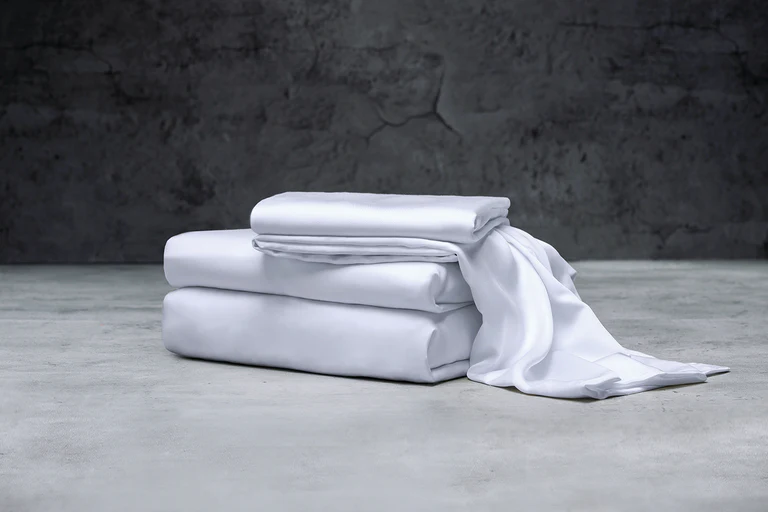
The sheets looked fine on delivery day. rangup, putih, neatly folded — and 22 percent cheaper than the incumbent’s quote, which is why the purchasing committee at a 400-bed regional hospital approved the switch. Twenty industrial wash cycles later, the complaints started: pilling across the sleeping surface, graying that no bleach cycle could reverse, and lint — lint everywhere, clogging the laundry’s filters and, worse, showing up in the sterile processing department’s audit as particulate contamination near instrument trays. By wash cycle forty, yang “simpanan” had evaporated into emergency reorders, a failed linen audit, and a laundry manager who refused to run the new sheets through her tunnel washers again. The committee had bought fabric; what they needed was engineering. This article goes inside the textile engineering that separates medical linen from ordinary bedding — so your next specification is written in the language of wash cycles, fiber physics, dan selesai, not thread counts on a brochure.
Most buyer guides treat medical linen as a shopping problem: Bandingkan harga, check certifications, meminta sampel. That advice is not wrong, but it is shallow. The real differentiator between medical linen suppliers lives one level deeper — in weave architecture, fiber selection, and finishing chemistry that determine whether a sheet survives 100+ industrial laundry cycles or dies at 40. Here is that deeper level, explained for buyers who sign the purchase orders.
The Wash-Cycle Gauntlet: Why Medical Linen Is an Engineering Problem
A hotel sheet lives a gentle life: washed at moderate temperatures, tumble-dried, replaced when it looks tired. A hospital sheet enters a different universe. Industrial tunnel washers run continuous high-temperature cycles with alkaline detergents, oxidizing bleaches, and mechanical action far more aggressive than any domestic machine. Sheets emerge into high-heat drying and calendering — pressed flat under heated rollers at temperatures that would scorch consumer bedding. Then the cycle repeats, dozens and dozens of times, with soiled linen sometimes sitting in bags for hours before processing, exposing fibers to prolonged contact with bodily fluids and cleaning chemistry.
This gauntlet destroys fabric in predictable ways, and each failure mode traces back to an engineering decision. Pilling comes from short, weak fibers migrating out of the yarn under mechanical abrasion. Graying comes from finishes and optical brighteners washing out, revealing the fiber’s natural tone, compounded by mineral deposits from hard water. Tearing at the hems comes from stitching specified for domestic laundry meeting industrial extraction forces. Loss of absorbency in towels and underpads comes from silicone softeners and fabric finishes building up cycle after cycle. A buyer who understands these failure modes can read a specification sheet the way an engineer reads a blueprint — asking not “what is the thread count” tetapi “what is the fiber staple length, what is the yarn twist, and what finishes will survive my laundry’s chemistry.”
Weave Architectures: Percale, Sateen, Twill, and Barrier Constructions
Weave is the skeleton of the fabric, and in clinical settings the choice of weave is a clinical decision, not an aesthetic one.
Percale: the clinical workhorse
Percale is a plain one-over-one-under weave — the simplest architecture, and for good reason the default for hospital sheets. Its tight, matte structure resists pilling because yarns are locked firmly in place, it releases soil readily in the wash, and it withstands high-temperature calendering without developing the sheen that makes sateen look worn. The trade-off is hand feel: percale starts crisp and can feel austere to patients accustomed to soft retail bedding. Untuk pembeli, the specification that matters in percale is not thread count alone but the balance of thread count and yarn size — a well-constructed T180 percale with strong yarns will outlast a loosely woven T250 in industrial service.
Sateen and twill: comfort with conditions
Sateen’s floating yarns create a lustrous, silky surface that patients love — and that industrial laundries punish. Those long floats snag, abrade, and pill under tunnel-washer mechanical action. Sateen has a place in medical linen — premium patient gowns, hospitality-grade blankets for private suites — but specifying sateen for high-turnover sheets is specifying a replacement cycle. Twill sits between the two: its diagonal structure drapes well and resists wrinkling, making it common in surgical scrubs and lab coats, where the diagonal also helps the fabric shed particulate rather than trapping it.
Barrier weaves: engineering against strikethrough
Surgical drapes and gowns face a different threat: liquid strikethrough, where blood or irrigation fluid penetrates the fabric and carries microorganisms to the sterile field. Barrier fabrics answer with dense constructions — sometimes multi-layer, sometimes incorporating membrane or tightly woven microfilament layers — engineered to block liquid penetration while allowing moisture vapor to escape so the surgical team does not overheat. The honest technical point buyers should grasp: barrier performance is a function of construction density and any laminated or coated layer, not of thread count. A supplier quoting thread count for a barrier drape is answering the wrong question. Ask for the hydrostatic head rating and the bacterial penetration test results instead.
Fiber Deep Dive: What Each Fiber Does Under Clinical Stress
If weave is the skeleton, fiber is the flesh — and fibers behave very differently after 100 wash cycles than they do on the sample swatch.
Long-staple cotton: the baseline
Cotton remains the backbone of medical linen for good reasons: it is absorbent, comfortable against skin, takes dye well, and tolerates bleach. But not all cotton is equal. Staple length — the length of the individual fibers — is the single most predictive fiber metric for wash durability. Long-staple cotton spins into smoother, stronger yarns with fewer exposed fiber ends, which means less pilling and slower strength loss across wash cycles. For buyers sourcing for the US market, the responsible specification language is long-staple or Egyptian-style cotton — describing the fiber quality, not the geography. Short-staple cotton, however cheap, is a false economy in clinical service: the pilling starts early and the lint it sheds becomes a contamination vector.
Tencel and lyocell: engineered cellulose
Lyocell fibers — marketed most famously as Tencel — are regenerated cellulose spun through a closed-loop solvent process. In clinical settings their advantages are concrete, not marketing: the fiber’s smooth surface resists bacterial adhesion better than cotton’s convoluted ribbon structure, its moisture management moves perspiration away from the patient (relevant for fever management and post-operative comfort), and wet strength retention is superior to standard viscose, which matters when linen sits damp in soiled bags. The honest limitation: lyocell costs more than cotton, and its advantages are most pronounced in patient-contact items — gowns, underpads, premium sheets — rather than in every SKU. A thoughtful specification uses lyocell blends where the clinical benefit justifies the cost and cotton percale where it does not.
Gentian buluh: what the claims really mean
Bamboo-derived viscose is marketed aggressively on softness and “natural antibacterial” hartanah, and buyers should separate the two claims. The softness is real — bamboo viscose has a fine, smooth fiber that drapes beautifully and feels luxurious against skin, which is why it appears in premium patient bedding. The antibacterial claim deserves skepticism: kebanyakannya “Buluh bila” antimicrobial assertions trace to the raw plant, not to the chemically processed viscose fiber, and independent wash-durability data for any inherent antimicrobial effect is thin. Bamboo viscose’s genuine clinical strengths are softness, drape, dan penyerapan lembapan. Its genuine weakness is wet strength — lower than cotton and lyocell — so it belongs in applications where gentleness matters more than brutal wash durability, and it benefits from blending with stronger fibers.
Polyester and blends: the durability bargain
Polyester brings what natural fibers cannot: near-indestructible wash durability, wrinkle resistance, and fast drying. A 50/50 atau 65/35 polyester-cotton blend is the workhorse of high-turnover institutional linen worldwide, and the engineering logic is sound — polyester supplies the skeleton that survives the tunnel washer while cotton supplies comfort and absorbency. The trade-offs are equally real: polyester pills if the fiber quality is poor, it holds odors more than cotton, and it generates static. For surgical environments, 100% polyester microfilament barrier fabrics dominate because lint generation must be near zero — a natural-fiber drape shedding lint into a sterile field is a non-starter.
GSM and Thread Count: The Specs That Predict Wash Survival
Buyers love single-number specifications. Suppliers love selling them. The truth is that no single number predicts durability — but two numbers together come close.
Thread count: necessary but not sufficient
Thread count measures yarn density, and within the same construction and yarn quality, higher is generally better. The trap is multi-ply yarn counting: a “600 kiraan benang” sheet woven from 2-ply yarns may contain fewer actual yarns than a honestly constructed 300-count single-ply percale — and those plied yarns can be weaker and pill-prone. For medical linen, the useful thread-count conversation is narrow: in percale, the T170–T200 range with strong single-ply yarns is the proven clinical workhorse. Chasing higher counts into sateen territory trades wash durability for a showroom feel your laundry will destroy.
GSM: the weight of durability
Grams per square meter measures fabric weight, and weight correlates with durability more honestly than thread count does. A heavier fabric has more fiber to sacrifice to abrasion before it fails. For clinical specifications, GSM bands are more useful than thread counts: light sheeting in the lower bands for high-turnover flat sheets where replacement economics favor lighter fabric, mid-weight for fitted sheets that take more mechanical stress at the corners, and heavy GSM for blankets, underpads, dan pelindung tilam. When a supplier cannot tell you the GSM of their fabric, they are telling you they do not control their weaving — walk away.
The combination that matters
Ask for both, plus yarn size and fiber content, and you have a real specification: “T180 percale, 100% long-staple cotton, 125 GSM, single-ply yarns” describes a fabric an engineer can evaluate. “High thread count cotton sheets” describes a marketing claim. The suppliers worth your time — including Tekstil Integriti Nantong, which publishes full construction data for its clinical lines — will answer the engineering question without flinching.
Finishes, Diterangkan Secara Jujur: Antimicrobial, Fluid-Barrier, and Soil-Release
Finishes are where medical linen marketing most often outruns chemistry. Here is what each major finish actually does, and where the claims get thin.
Antimicrobial finishes
Silver-ion, quaternary ammonium (quat), and PHMB-based finishes genuinely inhibit bacterial growth on fabric — under lab conditions, when freshly applied. The honest questions are durability and scope: how many industrial wash cycles does the efficacy survive, and does it cover the organisms your infection-control team actually worries about? Reputable finishes publish wash-durability data (often 50+ cycles for quality treatments) and test against standardized organisms. Red flags: “permanent antimicrobial protection” with no wash-cycle data, or efficacy claims against organisms irrelevant to your setting. Also understand the regulatory boundary: an antimicrobial-treated sheet is not a medical device, and no finish replaces laundering — it supplements it. Suppliers who imply otherwise are selling magic.
Fluid-barrier and DWR finishes
Durable water repellent (DWR) finishes — historically fluorocarbon-based, increasingly fluorine-free — cause liquids to bead rather than penetrate. They are valuable on surgical drapes, pelindung tilam, and underpads. Two honest caveats: DWR degrades with washing and needs periodic reactivation by heat (your calendering step actually helps here), and fluorine-free alternatives, while environmentally preferable, generally offer shorter-lived repellency than legacy fluorocarbons. For critical barrier applications, a laminated or membrane construction outperforms any topical finish — specify the construction, not just the finish.
Soil-release and easy-care finishes
Soil-release finishes help oily and particulate soils wash out rather than setting — genuinely useful for patient gowns and scrubs exposed to ointments and bodily fluids. Easy-care or “durable press” finishes reduce wrinkling but deserve caution: traditional formaldehyde-based resins are increasingly restricted, and even modern alternatives can reduce fabric strength and absorbency. For clinical linen, specify soil-release where it earns its keep and skip durable-press on anything where absorbency matters.
Wash-Durability Testing: Predicting 100 Cycles in the Lab
No buyer can wait two years to learn whether a sheet survives industrial service, so textile labs compress time. Accelerated laundering protocols run fabric through repeated high-temperature cycles with standardized detergents and ballast loads, then measure what changed: tensile strength retention, weight loss, dimensional change, pilling grade, and color difference. The numbers that matter are comparative, not absolute — a fabric that retains 70 percent of its warp tensile strength after 50 accelerated cycles will outlast one that retains 45 peratus, even though neither number tells you the exact retirement date. When you ask a supplier for wash-durability data, this is the report you are asking for, and a manufacturer with an in-house lab — like kilang kami in Nantong — can produce it per construction rather than quoting a generic brochure claim.
Shrinkage control: relaxation shrinkage vs. progressive shrinkage
Shrinkage kills fit, and in clinical linen fit is functional — a fitted sheet that shrinks past tolerance pops off the mattress at 3 a.m. and becomes a pressure-injury risk factor. Two mechanisms are at work. Relaxation shrinkage happens in the first few washes as tensions introduced during weaving and finishing release; it is largely predictable and is controlled at the factory through compressive shrinkage processes (sanforizing) and proper heat-setting. Progressive shrinkage continues cycle after cycle and signals a deeper problem: unstable yarn twist, inadequate finishing, or fiber blends that respond differently to heat. The engineering specification to demand is residual shrinkage after five industrial washes, tested to a named standard, with acceptance typically under 3 percent for sheets. Ask how the factory controls it — compressive finishing ranges, stenter settings, and whether shrinkage is verified per dye lot or per season. A supplier that cannot describe its shrinkage-control process is not controlling shrinkage.
Rintangan pilling: reading the Martindale and random-tumble grades
Pilling is graded on a 1–5 scale where 5 means no pilling, and the test method matters as much as the grade. The Martindale abrasion tester rubs fabric against a standard abradant in a figure-eight motion for thousands of cycles — excellent for comparing constructions side by side. The random-tumble pilling tester throws swatches into a rotating chamber with cork liners, simulating the chaotic mechanical action of a tunnel washer more faithfully. For clinical specifications, request pilling grades from both methods after a defined cycle count, and treat any grade below 3–4 at 5,000 Martindale cycles as a warning for high-turnover items. The fiber lesson from earlier returns here with numbers attached: long-staple cotton and filament synthetics grade higher because fewer short fiber ends migrate to the surface; short-staple cotton and low-twist yarns grade lower. Pilling is not cosmetic in a hospital — pills trap soil, harbor odor, and shed lint into environments where particulate control matters.
Colorfastness to industrial laundering and chlorine bleach
Hospital colors live under chemical siege: alkaline detergents, oxidizing bleaches, and chlorine at concentrations that would destroy fashion textiles. Colorfastness is graded 1–5 (5 = no change), and the grades that matter for clinical linen are wash fastness and bleach fastness specifically — not the rub or light fastness grades that dominate apparel specs. A surgical green that grades 4–5 to washing but 2 to chlorine will look fine in the sample room and turn patchy within months in a laundry that chlorinates. This is where dye selection becomes engineering: reactive dyes on cotton form covalent bonds with the fiber and resist wash-out far better than direct dyes, which is why serious medical linen suppliers specify reactive dyeing for colored clinical items and can show the fastness grades to prove it. Also ask about shade continuity across dye lots — a delta-E tolerance per lot — because a ward’s linen is replaced piecemeal, and visibly mismatched sheets get pulled by nursing staff even when the fabric is structurally sound.
Seam and hem engineering for high-temperature washing
Fabric can survive 150 cycles while its seams fail at 30, because seams concentrate every stress the flat fabric distributes. Three engineering decisions determine seam survival. Pertama, stitch type: yang 401 two-thread chainstitch stretches with the fabric and is the standard for knitted and high-stress seams, while the 301 lockstitch is secure but less elastic — mismatching stitch to fabric is a classic failure. Kedua, thread: core-spun polyester thread (polyester-wrapped core) combines the strength and chemical resistance of polyester with sewability, and it resists the chlorine degradation that destroys cotton thread. Ketiga, seam construction and density: flat-felled or lapped seams on gowns and drapes distribute load across two lines of stitching, bar tacks reinforce stress points like pocket corners and gown ties, and stitch density must be high enough to hold under extraction forces without perforating the fabric into a tear line. When you audit a supplier, ask to see the seam specification sheet — stitch type, SPI (jahitan setiap inci), thread composition, and hem widths — alongside the fabric data. Ask our technical team for ours: a factory that sews in-house can show you the seam engineering the same day you ask, because the sewing floor is down the hall from the sales office, not on another continent.
How to Read a Supplier’s Spec Sheet Like an Engineer
When the quotations arrive, ignore the brochure language and interrogate the spec sheet:
- Pembinaan: weave type, thread count with ply disclosure, GSM, yarn size. All four, or the sheet is incomplete.
- Fiber: exact content by percentage, staple length or fiber grade for cotton, fiber producer for lyocell where relevant. “Cotton-rich” is not a specification.
- Finishes: named chemistry, application method, and wash-durability data with the test standard cited. “Antimicrobial treated” without data is a wish.
- Kestabilan dimensi: shrinkage percentage after five industrial washes, tested to a named standard. Anything above 3–5% will cause fit problems on fitted sheets.
- Ketahanan warna: wash and bleach fastness grades. Hospital colors that fade unevenly get pulled by nursing staff long before they wear out.
- Pensijilan: Piawaian OEKO-TEX 100 for human-ecological safety is the baseline expectation for patient-contact textiles; ISO9001 for the quality system behind the claims.
A supplier that answers all six precisely is a manufacturer with a lab. A supplier that answers with adjectives is a trader with a brochure. That distinction is worth more than any unit-price difference, because the engineering you buy on day one determines what your laundry can process on day four hundred.
Why Manufacturing Control Matters for Technical Textiles
Technical specifications are only as good as the production control behind them. TEKSTIL INTEGRITI manufactures in its own facility in Tongzhou District, Nantong, Jiangsu — roughly 30,000 square meters of production space, about 143 pekerja, with monthly output around 40,000 set tempat tidur dan 25,000 set penutup selimut. Because weaving, mewarna, memotong, and sewing happen under one roof, construction parameters like GSM, yarn twist, and finish application are controlled at the source rather than negotiated through intermediaries. The operation holds ISO9001, ISO14001, ISO45001, dan Piawaian OEKO-TEX 100 pensijilan, and works across cotton, linen, gentian buluh, Tencel, and flannel constructions for both home textiles and hotel linen series — the same production discipline applied to clinical-grade specifications. The company also works on a “Hormati harga sasaran” basis: you state one target price, dan kilang menjawab ya atau tidak, which keeps technically complex quotations from dissolving into rounds of haggling.
Soalan Lazim
What thread count is best for hospital sheets?
For high-turnover clinical sheets, a honestly constructed T170–T200 percale in long-staple cotton is the proven choice — not because the number is magic, but because that construction balances soil release, calendering tolerance, and wash durability. Higher counts in sateen weaves feel luxurious on arrival and degrade faster under industrial laundering. Always confirm single-ply yarns and ask for GSM alongside the count.
Are antimicrobial sheets worth the premium for a general ward?
It depends on your infection-control protocol and your laundry chemistry. Quality antimicrobial finishes with published wash-durability data add a genuine supplementary hygiene layer, particularly for long-stay and immunocompromised patient areas. For general wards with rigorous laundering protocols, the marginal benefit is smaller — invest first in correct fiber, pembinaan, and GSM, which determine whether the sheet survives long enough for any finish to matter.
How many wash cycles should medical linen survive?
A well-engineered clinical sheet should deliver well past 100 industrial cycles before retirement criteria — thinning, loss of barrier integrity, or dimensional failure — are reached. Ask suppliers for their tested wash-durability data rather than accepting round numbers, and define retirement criteria in your specification so worn linen is pulled before it becomes a clinical risk.
Can bamboo fiber linen handle industrial laundry?
Bamboo viscose’s softness is real, but its wet strength is lower than cotton or lyocell, so pure bamboo constructions are not ideal for the harshest tunnel-washer regimes. Blends with cotton or polyester, or applications in lower-turnover premium bedding rather than high-turnover sheets, are the sensible way to use it. Be skeptical of “natural antibacterial” marketing claims for processed bamboo viscose.
What is the difference between a barrier fabric and a DWR finish?
A barrier fabric is engineered at the construction level — dense weaves, microfilament layers, or laminated membranes — to block liquid strikethrough, and its performance is measured by hydrostatic head and bacterial penetration tests. A DWR finish is a topical treatment that makes liquids bead on the surface; it degrades with washing and supplements rather than replaces barrier construction. For surgical drapes, specify the barrier construction. For mattress protectors and underpads, the combination of both is common.
Should I specify lyocell for all my clinical linen?
No — specify it where its advantages pay: patient-contact items where moisture management, smooth fiber surface, and wet strength matter, such as gowns, underpads, and premium sheets. For high-turnover flat sheets where economics dominate, a well-made long-staple cotton percale or polyester-cotton blend is the rational choice. Good specification is about matching fiber to function, not chasing a single premium fiber everywhere.
Specify the Engineering, Not the Adjectives
The hospital that bought those cheap sheets did not make a pricing mistake — it made a specification mistake. It bought “white sheets, high thread count” when it needed “T180 single-ply percale, long-staple cotton, 125 GSM, shrinkage under 3% after five industrial washes, OEKO-TEX certified.” Write your next RFQ in the language of this article, demand the six-line spec sheet from every bidder, and the wash-cycle gauntlet stops being a gamble.
If you want a manufacturing partner that answers engineering questions with data — construction sheets, wash-durability results, and full fiber disclosure — hubungi kami di Alex@integritytex.com atau WhatsApp +86 151 5289 1159. Nantong Integrity Textile has woven, dyed, and sewn bedding textiles since 2007, and we will give your target price a straight yes or no.