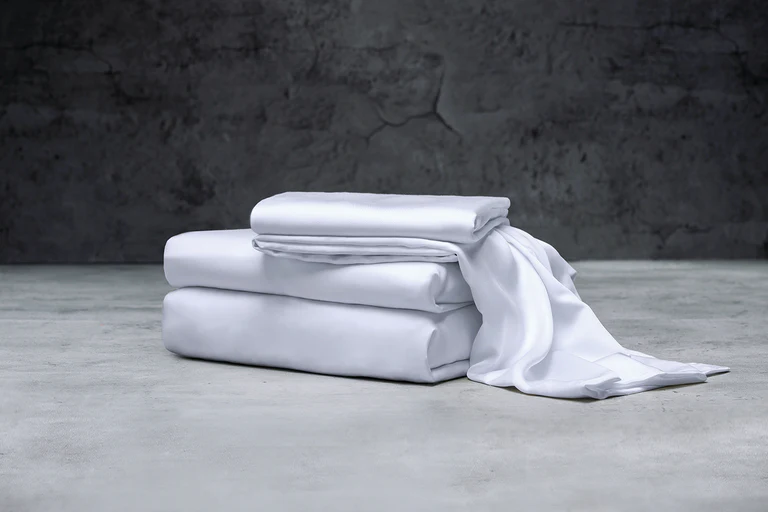
Last spring, a European beauty-brand owner — call her Maya — decided to add silk pillowcases to her skincare line. She had done her homework on marketing: influencers, unboxing videos, the works. For sourcing, she sent exactly one line to five suppliers: “สวัสดี, I need silk pillowcases wholesale. Please quote your best price for 5,000 pieces.” Replies landed within a day, and the quotes ranged from $2.80 ถึง $11.40 per piece — a spread so wide it should have been a warning siren. She picked the $4.60 quote because it “felt reasonable.” The samples looked glossy and fine. Then the bulk order arrived: fabric that measured 16 momme instead of the promised 22, a plain habotai weave instead of lustrous charmeuse, pillowcases two centimeters too narrow for standard pillows, and no envelope closure — just raw seams that snagged customers’ hair. One-star reviews piled up within weeks. Returns, chargebacks, and a dead product line cost her more than $18,000. The supplier’s reply was a single sentence: “You didn’t specify.”
Here is the uncomfortable truth about silk pillowcase sourcing: suppliers answer exactly what you ask — and quietly exploit everything you don’t. A vague inquiry doesn’t earn you a vague quote; it earns you a quote optimized against คุณ, with every unspecified detail resolved in the supplier’s favor. The buyers who consistently land genuine 22-momme charmeuse at fair, stable prices aren’t luckier than Maya. They simply ask better questions — in writing, from the very first message. The six templates below are the exact scripts the export team at หนานทงอินเทกริตี้เท็กซ์ไทล์ wishes every buyer would use. A precise inquiry lets a real manufacturer quote precisely — and it exposes the traders and corner-cutters who can’t.
Why Vague Inquiries Cost Real Money
A silk pillowcase has at least five independent cost drivers: น้ำหนักแม่, silk grade, weave structure, ขนาดเสร็จแล้ว, and closure style. Change any one of them and the factory’s cost moves 20 ถึง 60 เปอร์เซ็นต์. When your inquiry says nothing about these five, each supplier fills in the blanks with whatever makes their quote look attractive — or profitable. ที่ $2.80 quote Maya received wasn’t a bargain; it was 16-momme habotai with a zipper closure, a completely different product from the $11.40 quote for 25-momme charmeuse. She compared prices on products that were never comparable, because her inquiry never defined the product.
There is a second, subtler cost. Professional factories triage inquiries every morning, and one-line RFQs go to the bottom of the pile — or get a one-line quote from a junior salesperson who never checked with production. The detailed inquiry, by contrast, signals a serious buyer with real volume, and it lands on the desk of someone who can actually commit to a price and a delivery date. กล่าวอีกนัยหนึ่ง, the words you type in your first email directly determine the quality of the factory attention you receive. Spending twenty extra minutes on your inquiry is the highest-return activity in your entire sourcing process.
The Five Numbers Every Silk Pillowcase RFQ Must Contain
Before you copy a single template below, memorize these five specifications. Every template references them, and every serious supplier expects them:
- Momme (mm): the weight of the silk fabric, measured per 45 inches by 100 yards. For wholesale pillowcases, 16 momme is tissue-thin, 19 is acceptable for budget lines, 22 momme is the industry sweet spot for beauty and hotel programs, and 25–30 momme is true luxury. Below 19 momme, the fabric wears through quickly and customers notice.
- Silk grade: Grade 6A means the longest, most uniform mulberry silk filaments — smoother hand feel, richer sheen, far less pilling. Grades 5A and below use shorter fibers that pill and dull after a few washes. If a supplier just says “Grade A,” they are hiding something.
- สาน: charmeuse (ผ้าซาติน, glossy face) is what buyers picture when they hear “silk pillowcase.” Habotai is a plain weave — lighter, flatter, and cheaper. Silk twill has a diagonal texture. Name the weave explicitly or you will receive whichever is cheapest.
- Finished size: มาตรฐาน (20″ × 26″), ราชินี (20″ × 30″), กษัตริย์ (20″ × 36″). State whether dimensions are before or after washing — silk can shrink, และก “ราชินี” that measures 19″ × 28″ after one wash is a return waiting to happen.
- Closure style: envelope closure (fabric flap, no hardware, the premium standard), hidden zipper, or visible zipper. Each changes both cost and customer experience.
Put all five numbers in your first message and watch the quote spread collapse from four-times to roughly fifteen percent. That remaining spread is the real market — factory efficiency, not specification games.
แม่แบบ 1 — The First-Contact Message
Your first message does three jobs: it proves you are a professional buyer, it defines the product so completely that quotes become comparable, and it filters out suppliers who cannot meet the spec before anyone wastes time on samples. Copy, fill the brackets, and send:
- เรื่อง: RFQ — 22 Momme Charmeuse Silk Pillowcases, 5,000 ชิ้น, Q1 Delivery
- “สวัสดี, I am sourcing silk pillowcases for [your brand / country market]. Specifications: 100% ผ้าไหมหม่อน, 22 momme, Grade 6A, charmeuse weave, Queen size 20 x 30 inches (ที่เสร็จเรียบร้อย, after wash), envelope closure, natural white undyed. ปริมาณ: 5,000 ชิ้นส่วน, delivery to [port / country] โดย [วันที่]. Please quote: (1) FOB unit price at this quantity, (2) sample cost and sample lead time, (3) bulk production lead time, (4) your MOQ per color. Please also confirm whether your silk products hold OEKO-TEX Standard 100 certification.”
Why this works: the subject line alone pre-qualifies you — traders selling polyester “ผ้าไหม” won’t even open it. The five numbers appear in one breath. The four numbered asks force a structured reply instead of a bare price. And the certification question, placed last, is a quiet integrity test: a real certified factory answers immediately, while others go vague. Expect serious replies within two business days; silence is itself an answer.
แม่แบบ 2 — Pinning Down Momme, Grade, and Weave (Without Sounding Like an Amateur)
You sent Template 1. A supplier replies: “ใช่, we can do 22 momme Grade A charmeuse, best price $4.20.” It sounds perfect — which is exactly why you verify before celebrating. “22 momme” is the most abused number in the silk trade: some suppliers quote the กรีก (unfinished) น้ำหนัก, which drops after dyeing and washing; others simply round 19 ขึ้นไป 22. This follow-up sounds professional rather than suspicious, and it separates factories with real quality systems from quoters with a keyboard:
- “Thank you for the quotation. Before we move to samples, three quick confirmations: (1) Is the 22 momme measured on finished, washed fabric — and can you share a recent third-party lab test report for this fabric? (2) By Grade A, do you mean Grade 6A long-fiber mulberry silk? (3) For the charmeuse, what is the approximate weft density? We will be doing our own lab verification on the bulk fabric, so I want to make sure we are aligned from the start.”
That final sentence is doing the heavy lifting. Mentioning your own lab verification — even if you plan to use a basic independent test — changes the supplier’s risk calculation entirely. Factories that actually run สิ่งทอที่ซื่อสัตย์-style incoming-fabric inspections will welcome the question and send the report within a day. Suppliers who hesitate, deflect (“our quality is very good, trust us”), or claim test reports are “confidential” have just told you everything. Thank them politely and move on.
แม่แบบ 3 — The Sample Request That Actually Tests the Supplier
Most buyers treat samples as a formality and suppliers know it — which is why the “golden sample” problem exists: a flawless sample, followed by bulk goods made to a lower spec. Your sample request should be engineered as a test, not a formality. Never accept a free sample as proof of capability; free samples are marketing. A paid sample, specified ruthlessly, is an audit:
- “Please proceed with samples as follows: 3 pieces in final bulk specification — 22 momme, Grade 6A, charmeuse, ราชินี 20 x 30 inches finished size, envelope closure, natural white. Please make these on your normal production line, not as hand-made showroom pieces. I will pay the sample fee plus express courier cost. Please include a fabric swatch card marked with the momme, grade, and your OEKO-TEX certificate number. If the sample is approved, we will deduct the sample fee from the bulk order.”
When the samples arrive, run four checks before you fall in love with the sheen: measure the finished dimensions against your spec (silk shrinks — a sample cut generously can hide a bulk order cut tight); pull a loose thread and do a burn test (real silk burns slowly, smells like burnt hair, and leaves crushable ash — polyester melts into a hard bead); wash one piece once and check for shrinkage and color change; and inspect the envelope flap depth — a shallow flap means the pillowcase will gape open on the bed. A supplier confident in their production will pass all four without blinking. If the sample arrives in different packaging, different stitching, or a suspiciously heavier fabric than quoted, you have caught the golden-sample game early — which is precisely what the template was designed to do.
แม่แบบ 4 — Price Negotiation Lines That Keep the Relationship
Here is where most buyers destroy value. They write “give me your best price,” the supplier drops five percent, they write “still too high,” and the dance continues until someone surrenders on quality to hit a number. There is a better model, and it is how โรงงานของเรา prefers to work: the one-price method. You name a single target price based on your market math; the factory answers yes or no within 48 ชั่วโมง. No theater, no erosion of the spec. Here is the script:
- “Thank you — the sample is approved. Our target for this specification at 5,000 pieces is $[เอ็กซ์] per piece FOB [port]. This is a firm target based on our retail positioning. Can you meet it? If not, please tell me the closest you can do without changing the momme, grade, or weave — I would rather adjust quantity or delivery terms than compromise the specification.”
Three things make this work. อันดับแรก, anchoring with a specific number ends the guessing game and signals you have done your costing homework — suppliers respect buyers who know their numbers. ที่สอง, the italicized constraint is a firewall: it explicitly forbids the classic response of silently downgrading to 19 momme to “meet your price.” ที่สาม, offering to flex on quantity or terms instead of quality gives the factory an honest path to yes — perhaps 7,000 pieces hits your target, or a slightly longer lead time does. The buyers who get the best long-term pricing aren’t the toughest negotiators; they are the clearest communicators. A factory that knows your real target can engineer toward it; a factory guessing at your target can only gamble.
แม่แบบ 5 — The 48-Hour Follow-Up That Gets Answers
You sent a perfect RFQ. Three days pass. Nothing. Most buyers either wait two weeks (and lose their production slot) or send “just bumping this up” (which gets ignored). A follow-up needs a deadline and a consequence — polite, but unmistakable:
- “สวัสดี [ชื่อ], following up on my RFQ dated [วันที่] สำหรับ 5,000 pieces of 22-momme charmeuse silk pillowcases (ราชินี, envelope closure). We are shortlisting suppliers this Friday and placing the sample order next week. If I don’t hear from you by Thursday, I’ll assume the specification or timeline doesn’t work for you, and we’ll proceed with the shortlisted factories. Happy to jump on a quick call if anything in the spec needs clarification.”
This works because it reframes silence as a decision — “I’ll assume” puts the cost of not replying on them, while the call offer keeps the door open for genuine questions. Send it once. If there is still no reply, cross them off permanently: a supplier who can’t answer an email in a week will not answer when your bulk order has a problem either. Responsiveness during sourcing is the single best predictor of responsiveness during production.
แม่แบบ 6 — When Bulk Goods Don’t Match the Approved Sample
Even with perfect sourcing, problems happen. What separates professional buyers from angry ones is having the claim script ready ก่อน the container arrives. The moment you find a mismatch — wrong momme, wrong size, skipped envelope closure — document it with photos and measurements, then send this within 24 ชั่วโมง. Speed signals seriousness and preserves your leverage:
- “สวัสดี [ชื่อ], we have completed incoming inspection of [PO number / container number], and the goods do not match the approved sample (dated [วันที่]). ผลการวิจัย: (1) fabric measures approximately [เอ็กซ์] momme vs. the approved 22 momme — lab report attached; (2) finished size is [เอ็กซ์] เทียบกับ. the specified 20 x 30 inches — measurement photos attached. Per our agreement, please advise within 48 hours how you will resolve this: remake, discount, or return. We have held the goods unopened pending your response and documented everything.”
Notice what this script does not do: it doesn’t threaten, it doesn’t accuse anyone of cheating, and it doesn’t negotiate against itself by suggesting a discount percentage. It states facts, attaches evidence, sets a 48-hour clock, and lists the three acceptable outcomes. Factories with real quality systems — the kind that hold ISO9001 certification and run documented inspection checkpoints — will engage immediately, because their own records will show where the deviation happened. Suppliers who respond with “the sample was just for reference” have confessed that their sampling process is fiction. Keep every message in writing; phone calls are for relationship, email is for record.
Red-Flag Replies — When to Walk Away
ตลอดหลายปีที่ผ่านมา, sourcing managers have catalogued the replies that predict trouble. If you receive any of these in response to the templates above, treat them as disqualifiers, not negotiation openers:
- “Our silk is 22 momme (approximately).” Momme is a measured value, not a mood. “Approximately” means they don’t test, or they test and don’t like the result.
- “Grade A silk, top quality.” The grading scale runs 1A to 6A. “Grade A” without a number is a phrase designed to sound like a grade while committing to nothing.
- “Test reports are confidential.” A lab report on fabric weight contains no trade secrets. Refusal means there is no report.
- A quote in ten minutes with zero clarifying questions. A real factory checks greige availability, dyeing schedules, and line capacity before committing. An instant quote is a guess — and guesses get revised after you’ve paid the deposit.
- 100% TT in advance, no inspection clause. Standard practice is a deposit with balance against inspection or bill of lading copy. Full prepayment with no inspection rights removes your only leverage.
- The sample is suspiciously better than the price suggests. If a $4.20 quote arrives with a sample that feels like $8 ผ้าไหม, you’re looking at a golden sample. Request a second sample explicitly “from normal production” and compare.
คำถามที่พบบ่อย
What momme should I specify for wholesale silk pillowcases?
For most wholesale programs — beauty brands, hotel amenities, e-commerce private label — 22 momme in Grade 6A mulberry silk is the sweet spot where durability, sheen, and cost balance. 19 momme works for aggressive price points but thins noticeably within a year of regular washing. 25 momme and above is genuine luxury territory with a matching price. Whatever you choose, specify the number in writing and verify it — “high momme” on a quotation means nothing.
How can I verify momme without access to a textile lab?
Ask the supplier for a third-party test report first — reputable manufacturers provide these routinely. As a field check, do the burn test on a loose thread: real silk smolders slowly, smells like burnt hair, and leaves a crushable black ash, while polyester melts into a hard bead. You can also weigh a known area of fabric and calculate, though lab testing remains the only definitive method for a bulk shipment. Build one independent test into your first order’s budget; it pays for itself many times over.
Is charmeuse the same thing as mulberry silk?
No — and confusing them is one of the costliest beginner mistakes. “Mulberry silk” describes the fiber: silk from Bombyx mori silkworms fed on mulberry leaves. “Charmeuse” describes the weave: a satin weave with a glossy face and dull back. You can have mulberry silk in habotai, สิ่งทอลายทแยง, or organza weaves, and you can have charmeuse woven from polyester. Your specification must name both the fiber and the weave, or the supplier will choose the cheaper interpretation of whichever word you used.
Should I order undyed or dyed silk pillowcases?
Natural white, undyed silk is the safest choice for sensitive-skin and beauty positioning — no dye chemistry near the face, and one less variable in quality control. If your brand needs color, insist on OEKO-TEX Standard 100 certification for the dyed product and request a washing colorfastness report; deep shades on silk are technically demanding, and this is where corner-cutting shows up first as fading or crocking. ไม่ว่าจะด้วยวิธีใด, approve the color on a bulk-dye lot sample, never on a lab dip alone.
How do I handle a supplier whose quote is far below everyone else’s?
Treat an outlier quote as a specification mismatch until proven otherwise — send Template 2 and demand the five numbers plus a lab report. In almost every case, ที่ “bargain” turns out to be lower momme, lower grade, or a different weave. If the supplier genuinely holds the spec at that price, ask yourself what is being subsidized: overstock greige, a new factory buying market share, or quality you can’t see yet. There are good deals in this industry, but there are no miracles.
Send One Precise Inquiry — Get One Precise Quote
Maya’s $18,000 lesson wasn’t about silk. It was about language: the buyer who writes precise specifications gets precise products, and the buyer who writes one vague line gets whatever the supplier felt like shipping that day. Copy these six templates into your sourcing playbook, fill in your five numbers, and send the same professional inquiry to three shortlisted manufacturers. Compare their answers the way you’d compare lab results — because that is what they are. If you’d like to test these scripts against a real manufacturer, ติดต่อเรา: หนานทงอินเทกริตี้เท็กซ์ไทล์ (founded 2007, Tongzhou District, หนานทง, มณฑลเจียงซู) manufactures mid-to-high-end home textiles including silk bedding programs, holds ISO9001, ISO14001, ISO45001, และมาตรฐาน OEKO-TEX 100 การรับรอง, and works on a one-price model — you name your target price, we answer yes or no within 48 ชั่วโมง. Reach us at Alex@integritytex.com or WhatsApp +86 151 5289 1159, and put Template 1 to the test.