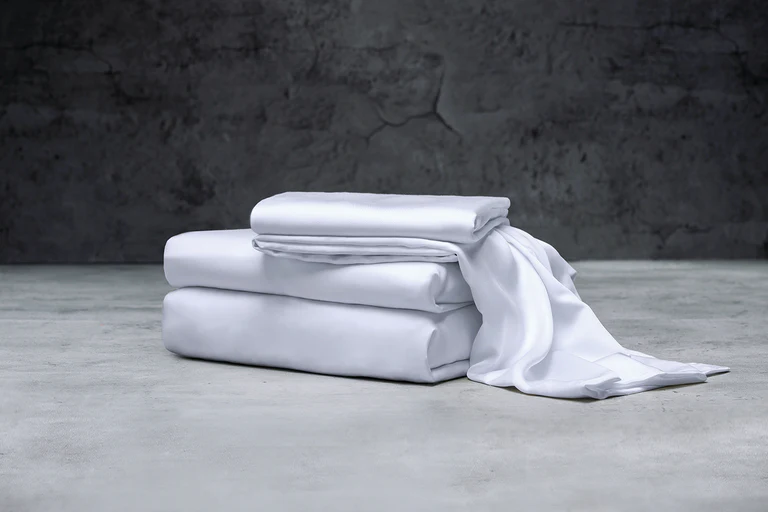
If you have ever opened a hospital linen closet and found sheets that tore after thirty industrial washes, pillowcases that bled dye onto white duvets, or patient gowns that pilled into sandpaper, you have already paid the real price of choosing hospital linen suppliers on purchase price alone. Healthcare textiles live a brutal life: high-temperature wash tunnels, aggressive alkaline detergents, chlorine disinfection, autoclave-level heat, and continuous rotation through wards where failure is not a comfort issue but an infection-control issue. A supplier that treats a hospital sheet as “just a bed sheet” will fail you. This technical deep dive explains the fabric engineering behind real healthcare linen — weave structures, GSM, barrier performance, and industrial-laundry durability — so you can tell, before you place an order, which hospital linen suppliers are genuine healthcare textile manufacturers and which are general bedding makers wearing a lab coat.
Why Hospital Linen Is Not Hotel Linen
Hotel linen is engineered for one thing: a crisp first impression. It is washed at moderate temperatures, handled gently by room attendants, and replaced on a comfort schedule. Hospital linen is engineered for survival. A single flat sheet in a 200-bed hospital can pass through an industrial tunnel washer 150 に 200 times in its service life, with water temperatures routinely above 70 degrees Celsius, caustic detergents, chlorine or peroxide bleach, and extraction forces that would shred a consumer-grade sheet in weeks. On top of that, healthcare fabrics must control lint, resist fluid strike-through, release stains in the wash, and dry fast enough to keep laundry throughput economical. None of these requirements appear on a hotel specification sheet, and a supplier whose core business is hospitality or retail bedding will not have built its engineering around them. When you evaluate 南通誠実紡織, ask first whether the factory’s production lines, QC checkpoints, and fabric development are organized around healthcare loads — or whether hospital linen is a side category squeezed into a hotel-linen workflow.
Weave Architecture: The Skeleton of Healthcare Fabric
Everything about a fabric’s performance starts with how its yarns interlace. For hospital sheeting, three weave families dominate, and each exists for a technical reason.
Plain Weave (Percale) — The Workhorse
Percale is a one-over-one-under plain weave, and it is the default for hospital sheets for good reason. The tight, balanced interlacing gives maximum yarn support per square centimeter, which translates into high tensile and tear strength, good dimensional stability through repeated hot washes, and a smooth surface that releases stains well and generates minimal lint. A true percale hospital sheet typically runs 180 に 220 threads per square inch in the finished fabric, built from combed cotton or cotton-rich blends. Be suspicious of any supplier quoting “hospital percale” below these densities: the fabric may be a loose plain weave that will shrink, skew, and thin out within months.
Twill Weave — For Durability Under Load
Twill’s diagonal rib structure packs more yarns per inch than plain weave at the same yarn count, which gives it superior abrasion resistance and drape. In healthcare, twill appears in patient gowns, scrubs-adjacent garments, mattress ticking, and heavy-duty draw sheets where the fabric takes constant friction. The trade-off is a slightly higher lint profile than percale and a surface that can trap fine soils, so twill healthcare fabrics need proper singeing and finishing. A supplier should be able to tell you exactly which of its hospital items use twill and why — if everything is described as “polyester cotton” with no weave specification at all, you are not talking to an engineered-textile supplier.
Barrier and Dobby Weaves — Engineered Zones
Barrier fabrics use multi-layer or coated constructions to block fluid strike-through for items like surgical drapes, マットレスプロテクター, and incontinence pads. Dobby weaves create small geometric patterns that add mechanical strength and surface interest for blankets and thermal blankets. What separates professional hospital linen suppliers from generalists is the ability to match the weave to the item’s clinical job: percale for sleeping surfaces, twill for high-friction garments, barrier constructions where fluid resistance is non-negotiable. Ask for a weave map of the supplier’s hospital range. A real healthcare manufacturer has one; a reseller has a price list.
GSM: What the Number Really Measures (and What It Hides)
Grams per square meter (GSM) is the most quoted and most abused number in textile procurement. For hospital sheeting, the working range is roughly 115 に 160 GSM: light enough to wash, dry, and handle economically at scale, heavy enough to survive industrial laundering. Go lighter and the sheet thins to translucency within a year; go heavier and you pay for extra water, energy, and drying time on every single cycle, forever.
But GSM alone proves nothing, because two fabrics at 140 GSM can behave completely differently. The number tells you mass, not architecture. あ 140 GSM fabric made from short-staple, open-end yarns with a loose weave will pill, lint, and tear far sooner than a 140 GSM fabric made from combed ring-spun yarns in a tight percale. Serious buyers read GSM together with four companions: 糸番手 (Ne) and spinning method, thread count per inch in warp and weft, weave type, and fiber composition. Any hospital linen quote that gives you GSM without the other four is a quote you cannot technically evaluate — and that is exactly how low-ball suppliers hide inferior engineering behind an impressive-sounding number.
- Ask for all five: GSM, yarn count and spinning system, warp/weft density, weave type, fiber blend percentage.
- Ask for finished vs. greige values: fabrics lose or gain mass through dyeing and finishing; specifications must state which stage the GSM refers to.
- Ask for tolerance: a professional supplier states GSM tolerance (commonly plus or minus 3 に 5 パーセント) and tests it per lot.
Barrier Performance: Where Healthcare Specs Get Clinical
For items that stand between bodily fluids and everything else — surgical drapes, underpads, マットレスプロテクター, isolation gowns — the critical engineering property is barrier performance: the fabric’s ability to resist liquid penetration while remaining breathable enough for patient comfort. This is measured through standardized hydrostatic pressure and impact penetration tests, and it depends on fiber choice, fabric density, and finishing chemistry working together. Polyester-rich blends and microfiber constructions dominate here because polyester fibers do not absorb water the way cotton does, and tightly constructed synthetics can be finished for fluid repellency without laminates.
The durability question is what separates real barrier textiles from marketing claims: a fluid-repellent finish that washes out in twenty cycles is worse than useless, because it creates a false sense of protection. Professional healthcare suppliers test barrier performance after repeated industrial launderings — not just on fresh-off-the-loom fabric — and can show you the retained performance curve. When a supplier claims “fluid resistant” または “barrier” on a hospital product, your next question should always be: resistant after how many wash cycles, tested to which standard, and can I see the retained-performance data? If the answer is a brochure instead of test reports, keep looking.
Industrial-Laundry Durability: The 200-Wash Test
This is the property that decides your true cost per use. A hospital sheet’s purchase price is only the down payment; its real cost is the purchase price divided by the number of service cycles it survives. A sheet that costs 20 percent less but lasts 60 washes instead of 150 costs you far more — in replacement purchases, in laundry handling of failed goods, and in the operational chaos of linen shortages on the ward.
Industrial-laundry durability is engineered at every stage. Yarn quality comes first: combed, ring-spun yarns with low hairiness shed less lint, pill less, and hold tensile strength longer than carded or open-end yarns. Fabric construction comes second: adequate density and proper weave balance prevent the skewing and thinning that kill cheap sheeting. Finishing comes third: mercerization improves cotton’s strength and dye uptake, proper sanforizing controls shrinkage, and the right softener package balances hand feel against absorbency loss. ついに, sewing construction — seam types, ステッチ密度, thread choice — determines whether the sheet fails at its hems before its body gives out, which is the most common failure mode of under-engineered hospital linen.
Evaluate durability with data, not adjectives. A credible supplier provides: dimensional stability results after repeated hot washes (shrinkage should stay within a tight, stated tolerance), tensile strength retention curves, pilling grades across wash cycles, and colorfastness ratings after chlorine exposure. Our factory subjects its healthcare-range fabrics to repeated industrial-wash simulation before approving any construction for hospital programs, because a specification that cannot survive the laundry is not a specification at all.
Colorfastness and Whiteness Retention
White is the color of healthcare, and keeping it white is a chemical engineering problem. Hospital whites face chlorine bleach, peroxide, high alkalinity, and temperatures that strip optical brighteners and degrade dyes. Two numbers matter here: 白さの保持 (does the white stay white, or does it grey and yellow within months?) and colorfastness for any colored items such as patient gowns, staff-adjacent textiles, or color-coded draw sheets (does the dye bleed in the wash or transfer onto whites in the same load?).
Dye bleeding is more than a cosmetic issue — it is a batch-contamination issue. One load of poorly fixed colored gowns can grey an entire tunnel of white sheets, and the cost of that failure lands on the laundry, not the supplier. Professional hospital linen suppliers test colorfastness to washing at healthcare temperatures, not just at the mild 40-degree consumer standard, and they can state the test method and grade for every colored item in the range. For whites, ask about the finishing package: optical brighteners that wash out in ten cycles are a classic cheap trick, producing a dazzling sample and a grey reality. Durable whiteness comes from proper bleaching, シルケット加工, and finishing chemistry designed for the healthcare wash regime — and a supplier should be able to explain its package in plain technical language.
縫い目, Hems, and the Details That Fail First
Walk through any hospital laundry’s reject bin and you will notice something: most failed sheets did not die in the middle of the fabric. They died at the edges. Hem unraveling, seam slippage, and broken stitching account for a large share of premature hospital linen retirement, which means sewing engineering deserves the same scrutiny as fabric engineering.
The checkpoints are concrete and checkable. Hem width and construction: hospital hems should be wide, double-folded, and stitched with a lockstitch at adequate stitch density — narrow single-fold hems roll, fray, and unravel under industrial extraction. Seam type: flat-felled or properly overlocked seams for items under stress; plain seams that split at the first aggressive wash cycle are a sign of consumer-grade construction. Thread: high-tenacity polyester sewing thread, not cotton thread that rots in chlorine. ステッチ密度: too low and seams open; the supplier should state stitches per inch as a controlled parameter, not a whatever-the-machine-does outcome. ついに, ラベリング: healthcare items need durable, wash-proof labels that survive the same regime as the fabric — paper-feel labels that disintegrate and clog drains are a small detail with outsized laundry consequences.
- Request a seam map: which seam type is used on each product, そしてなぜ.
- Check stitch density: stated, controlled, and consistent across production lots.
- Pull-test hems on samples: a proper hospital hem resists deliberate unraveling; a weak one starts to go with a fingernail.
認証: Which Ones Actually Mean Something
Certification logos are easy to print and hard to verify, so buyers need to know which ones carry technical weight for healthcare textiles. OEKO-TEX標準 100 is the meaningful baseline: it certifies that every component of the finished article — fabric, thread, buttons, labels — has been tested against a strict list of harmful substances. For products used against patients’ 肌, day after day, this is not decoration; it is the minimum credible safety claim. ISO9001 signals that the factory runs a documented quality management system rather than inspection-by-luck. ISO14001 and ISO45001 speak to environmental and occupational-health management — increasingly relevant as hospital groups audit their supply chains for ESG compliance. INTEGRITY TEXTILE holds all four: ISO9001, ISO14001, ISO45001, およびエコテックス規格 100, across a production base of roughly 30,000 square meters with about 143 employees and monthly capacity of around 40,000 寝具セットと 25,000 duvet-cover sets.
Beyond these, treat claims carefully. “Medical grade” そして “hospital grade” are marketing phrases, not regulated textile categories in most markets — what matters is the test data behind the adjective. Any supplier can write “抗菌” on a brochure; a professional one shows you the test standard, the active agent, the wash-durability of the effect, and the regulatory status of the claim in your market. When certifications are presented, verify the certificate numbers and scopes: a certificate that covers only greige fabric does not certify the finished, dyed, sewn article you are buying.
Seven Questions That Separate Real Healthcare Suppliers
Use these on every factory you evaluate. The pattern of the answers tells you more than any single data point.
- What is your healthcare wash-test protocol? You want a described regime — temperatures, chemistry, cycle counts — not “we wash-test our products.”
- Show me a five-parameter spec sheet (GSM, yarn count and spinning, warp/weft density, 織ります, blend) for your three best-selling hospital items.
- What is your barrier retention after 50 そして 100 工業用洗浄剤 for fluid-protection items, and to which test standard?
- What is your seam and hem engineering standard — seam types per product, ステッチ密度, thread specification?
- How do you control shrinkage lot to lot, and what is your stated tolerance?
- Which certifications cover the finished sewn article, not just the fabric — and may I verify the certificate scope?
- Can you run OEM/ODM to my hospital group’s specification, including custom sizing, color-coding, and private labeling, with documented QC at each stage?
A general bedding maker will answer several of these with variations of “we can do whatever you need.” A real healthcare textile manufacturer will answer with numbers, standards, and documents — because the engineering was done before you asked.
よくある質問
What GSM should hospital bed sheets be?
For general ward sheeting, 115 に 160 GSM is the practical range: durable enough for industrial laundering, light enough for economical washing and drying. But GSM must always be read together with yarn quality, weave density, and fiber blend — a well-engineered 130 GSM percale outlasts a poorly made 150 GSM sheet.
Is 100 percent cotton or a polyester-cotton blend better for hospital linen?
It depends on the item’s job. Cotton-rich percale offers superior comfort, 通気性, and stain release for sleeping surfaces. Polyester-cotton blends (commonly 50/50 または 65/35) give better wrinkle resistance, faster drying, longer service life, and stronger barrier-relevant properties for protective items. Many hospital programs use cotton-rich for patient-contact surfaces and blends for high-turnover or fluid-exposed items.
How many industrial wash cycles should hospital linen survive?
A professionally engineered hospital sheet should deliver well over 100 industrial cycles, with premium constructions reaching 150 に 200. Always ask the supplier for wash-durability data — shrinkage, tensile retention, pilling grades, and whiteness retention across cycles — rather than accepting a cycle claim without test backing.
What is the difference between a hospital linen supplier and a hotel linen supplier?
Engineering priorities. Hospital linen is designed around industrial laundering survival, lint control, barrier performance, and infection-control compatibility; hotel linen is designed around appearance, 手の感触, and guest comfort under gentle washing. A supplier whose QC, テスト, and product development are organized around healthcare loads will consistently outperform a hospitality supplier selling into hospitals as a side market.
Why does hospital white linen turn grey or yellow?
Usually a combination of optical brighteners that wash out quickly, inadequate bleaching or mercerization at the fabric stage, dye transfer from poorly fixed colored goods washed in the same loads, and iron or mineral deposits from water and chemistry. A supplier with a proper healthcare finishing package and wash-tested colorfastness data largely prevents the first three causes.
Can a factory customize hospital linen to our group’s specification?
Yes — with the right partner. Look for OEM/ODM capability with documented QC: カスタムサイズ, color-coding systems, private labels, barrier constructions for specific items, and packing configured for your laundry or sterilization workflow. INTEGRITY TEXTILE has operated as an OEM/ODM manufacturer since 2007 and can develop hospital programs to specification rather than selling only off-the-shelf SKUs.
Specify It Like an Engineer, Buy It Like a Professional
The cheapest hospital linen is the linen you buy twice — or the linen that fails on the ward. When you evaluate hospital linen suppliers, demand the engineering: five-parameter fabric specs, wash-durability data, barrier retention curves, seam standards, and certifications that cover the finished article. Nantong Integrity Textile Co., 株式会社. has manufactured and exported mid-to-high-end home and healthcare textiles since March 2007 from Tongzhou District, Nantong City, Jiangsu — bedding sheet sets, 掛け布団セット, quilted bedding, 生地, hotel and healthcare linen series, 毛布, and pillows — with ISO9001, ISO14001, ISO45001, およびエコテックス規格 100 認証, そして “目標価格を尊重する” one-price model: you name your target price, and the factory answers make-or-not with no haggling. To discuss your hospital program’s specifications, Eメール: Alex@integritytex.com | ワッツアップ: +86 151 5289 1159, または お問い合わせ through our website.